
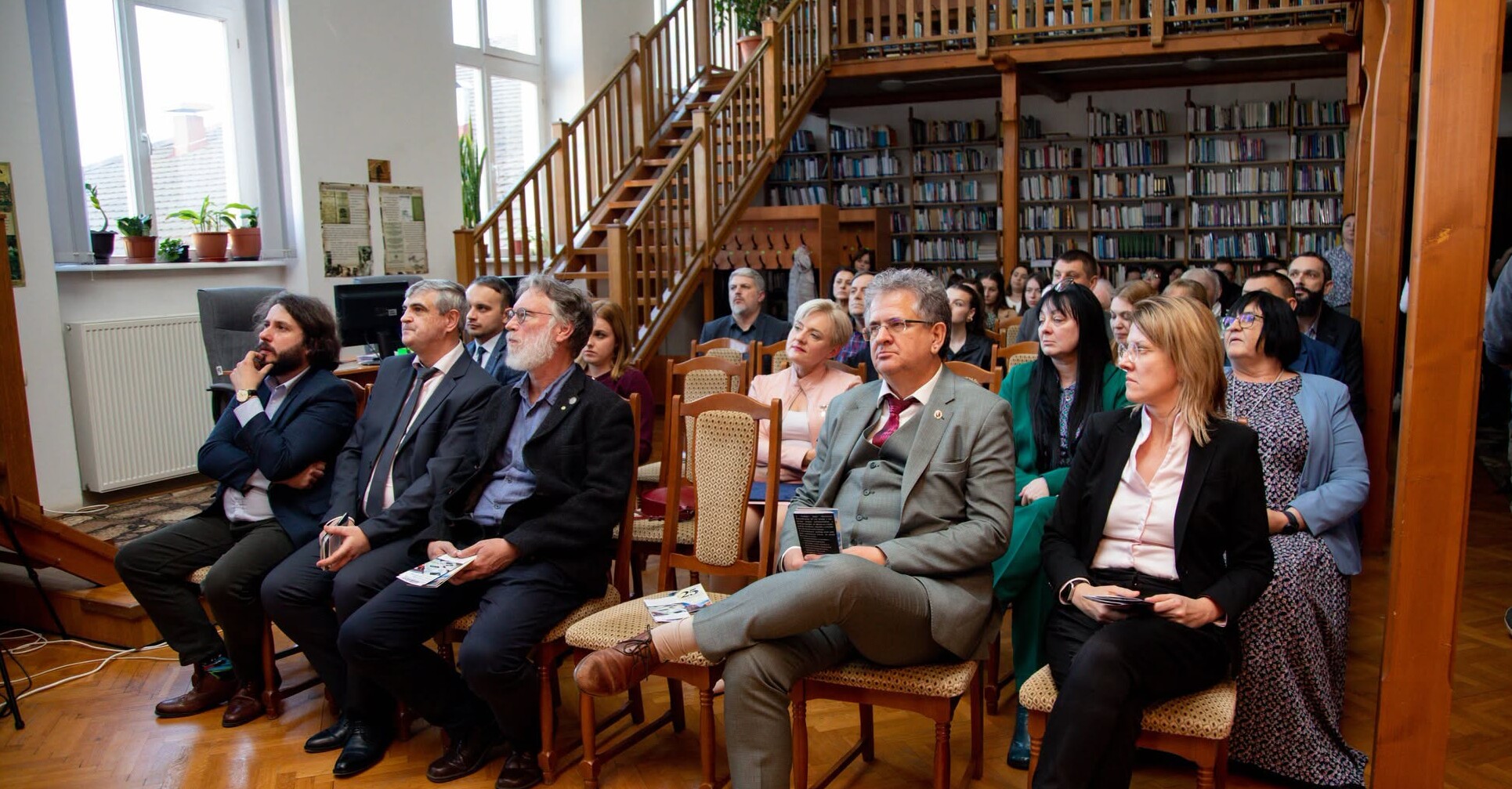
The Antal Hodinka Linguistics Research Center and the Tivadar Lehoczky Social Sciences Research Center have been serving Hungarian scholarship in Transcarpathia for 25 years. The work and achievements of the two research centers were commended at the event titled Two workshops, one mission – 25 years in Transcarpathian Hungarian Scholarship on October 28, held within the framework of the 30th anniversary week of the University of Rakoczi.
Those present were welcomed by academician Károly Kocsis, Chairman of the MTA Hungarian Science Abroad Presidential Committee, who highlighted the role of the two research centers in the scientific life of Transcarpathia and their contribution to enriching Hungarian scientific knowledge.
“We are proud of you and your work, because local history and knowledge of the Hungarian in the Carpathian Basin does not merely exist as a whole, but is built up from its constituent parts,”
he added.
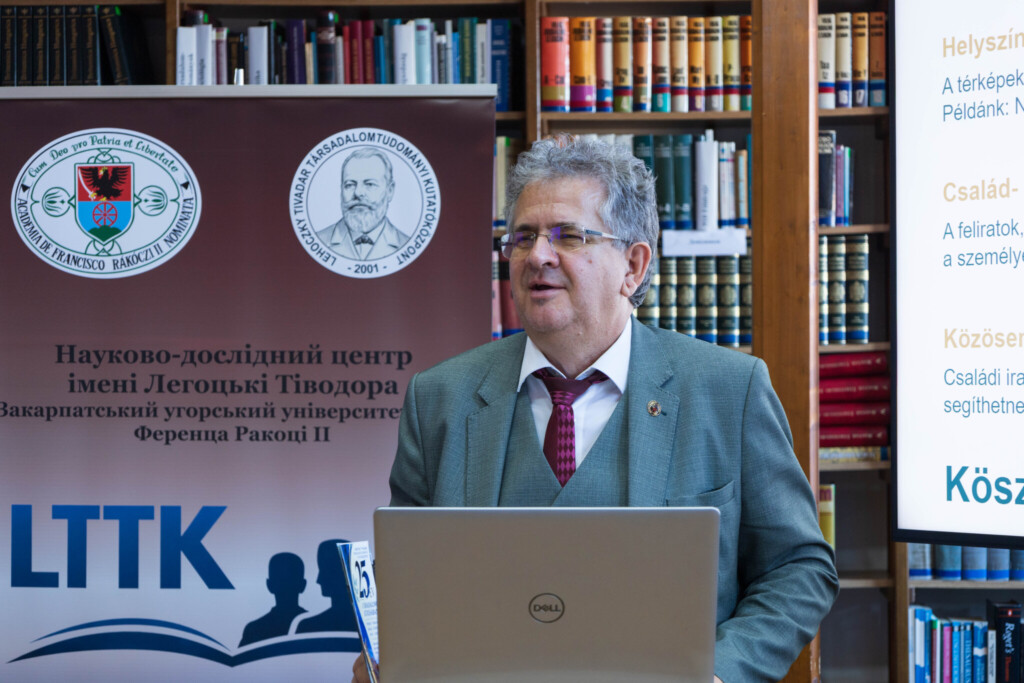
István Csernicskó, Rector of the University of Rakoczi, recalled in his address the past 25 years and the beginnings.
“If the research centers had achieved nothing else than providing a dozen young colleagues with PhD degrees to this institution and to scholarship in general, we could still say it was worth it,”
he said.
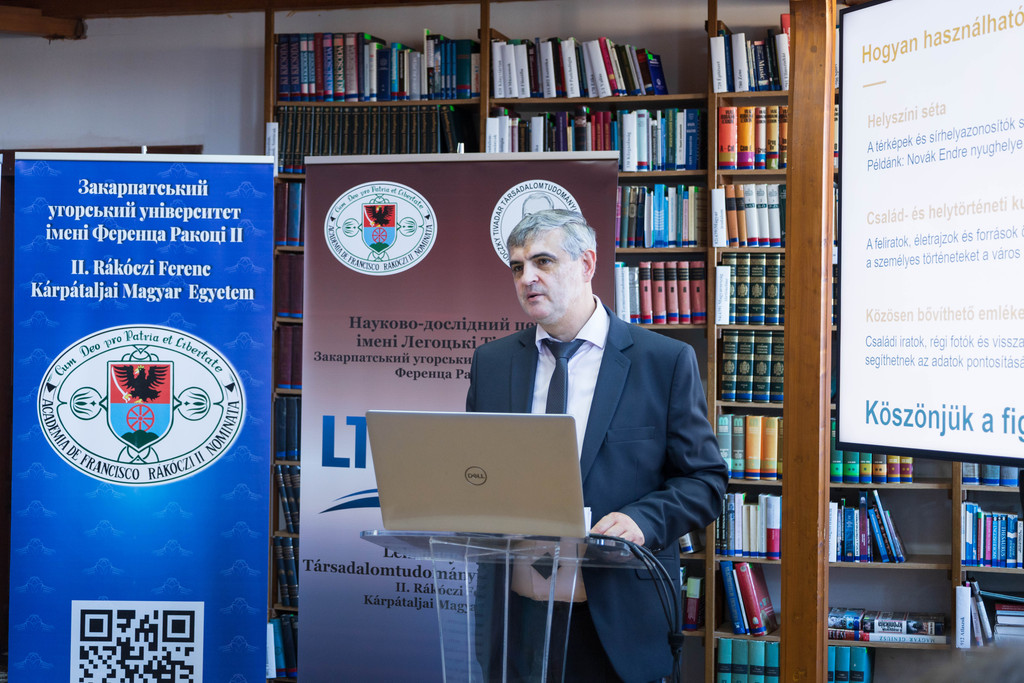
Imre Szakál, Vice-Rector of the university, spoke about the effectiveness of the research centers.
“Both research centers shape the image formed of Transcarpathia, and their operations are also of paramount importance for our university, as they expand the achievements of our institution’s scientific activity and exert an educational-content-generating effect. I congratulate you on the results achieved so far,”
he emphasized.
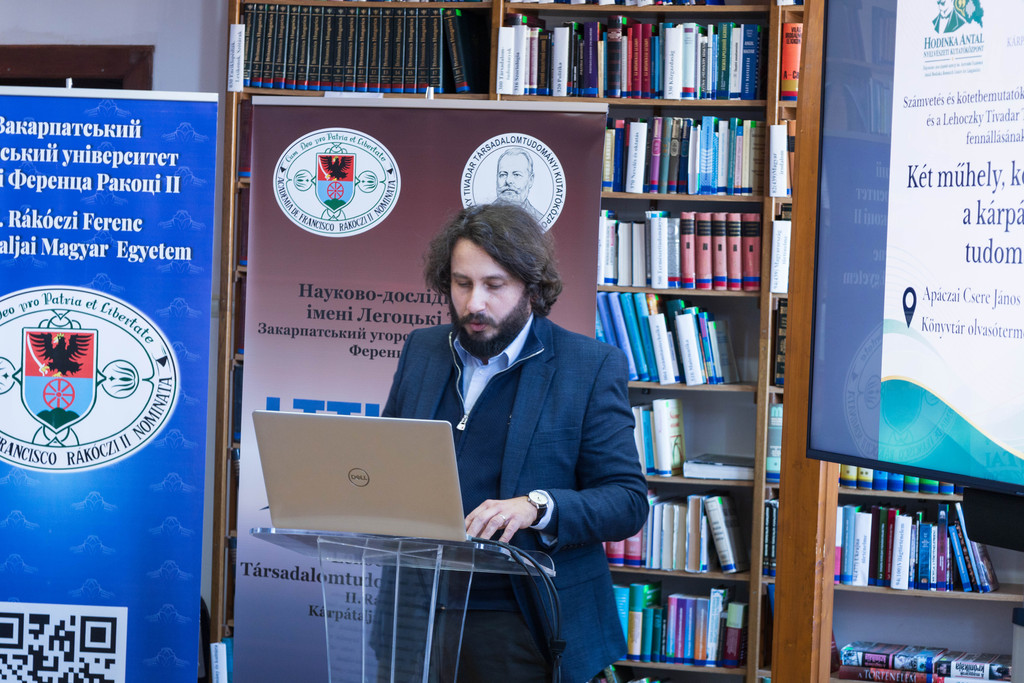
Following the welcome speeches, Erzsébet Molnár D., Head of the Department of History and Social Sciences and Senior Researcher at the Tivadar Lehoczky Research Centre for Social Sciences; György Csatáry, Professor at the Department; and Béla Rácz, Associate Professor at the Department, delivered a presentation entitled The life and work of Tivadar Lehoczky.
Next, Vilmos Gazdag, Associate Professor of the Hungarian Departmental Group within the Department of Philology and former colleague of the Antal Hodinka Research Centre for Linguistics, outlined the life and work of Antal Hodinka.
Subsequently, Katalin Pallay, Head of the Tivadar Lehoczky Research Centre for Social Sciences, presented the scientific activities and main achievements of the Lehoczky Research Center over the past 25 years. We learned that the research center primarily focuses on the history of Transcarpathia, social processes, and the past and present of local communities. Its main research areas include exploring the history of Sovietization and deportations, local history research, cemetery documentation, as well as examining educational and social changes.
Following this, Kornélia Hires-László, Head of the Antal Hodinka Research Centre for Linguistics, presented the quarter-century work and scientific achievements of the Hodinka Research Center. She highlighted that their primary task is examining the language use, linguistic characteristics, and language situation of the Hungarian communityin Transcarpathia. Through their research, surveys, and analyses, they contribute to understanding the region’s linguistic dynamics, making their results accessible to both academic life and the local community. Their activities encompass empirical research, questionnaire surveys, interviewing, analyzing language-related legislation, and supporting the application of research results in education and policymaking. Over the past 25 years, their staff have participated in more than 300 professional events across 64 settlements in 24 countries.


In the second half of the event, book presentations took place. First, Anna Lehocki-Samardžić presented the volume KOMP – Competencies in social context: assessment results and background factors of Transcarpathian Hungarian students, edited by Kornélia Hires-László and Katalin Pallay. The volume presents the assessment results of Transcarpathian Hungarian students in native-language reading comprehension, mathematics, English, and Ukrainian. The studies also examine the family, school, and community background factors influencing performance, contributing to the understanding and development of minority education. The authors of the publication are Anikó Beregszászi, Head of the Department of Philology; István Csernicskó, Rector of the University of Rakoczi; Ádám Daróci, Associate Professor at the Department of Mathematics and Informatics; Kornélia Hires-László; Ilona Huszti, Associate Professor of the English Departmental Group within the Department of Philology; Katalin Kucsinka, Associate Professor at the Department of Mathematics and Informatics; Erzsébet Molnár D.; István Molnár D., Associate Professor at the Department of Geography and Tourism; Ildikó Orosz, President of the University of Rakoczi; Katalin Pallay; and Andrea Pősze, Associate Professor of the Ukrainian Departmental Group within the Department of Philology.
Following this, the publication Hungarian-related tombstones of the Kalvariia Cemetery of Uzhhorod, edited by István Molnár D. and Dániel Dmitrienko, was presented. The publication showcases the history, tombstones, and Hungarian-related monuments of the cemetery. During the research, tombstones were documented, revealing the historical, linguistic, and cultural values of the cemetery, as well as the memory of prominent personalities who played a decisive role in Uzhhorod’s past.
Anita Kurmay

