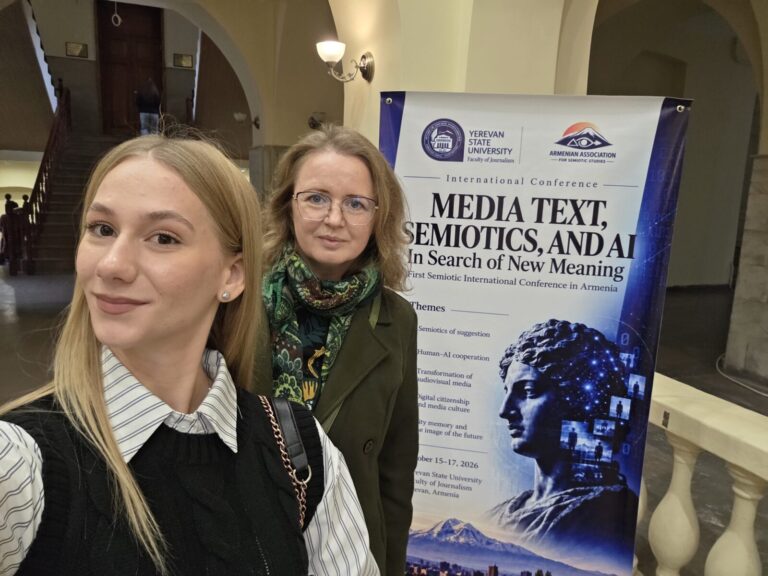
Language policy in Transcarpathia, minority language use, and school linguistic landscapes featured at the international academic conference “Media Text, Semiotics, and AI: In Search of New Meaning”, held at Yerevan State University on 15–17 October 2026. Representatives of Ferenc Rákóczi II Transcarpathian Hungarian University contributed to the event by presenting research results and chairing sessions.
The conference, which brought together participants in person and online, explored the relationships between media texts, semiotics, and artificial intelligence, alongside research on multilingualism, linguistic landscapes, and cultural memory. Scholars from different countries shared findings from studies conducted in a range of linguistic and social contexts.
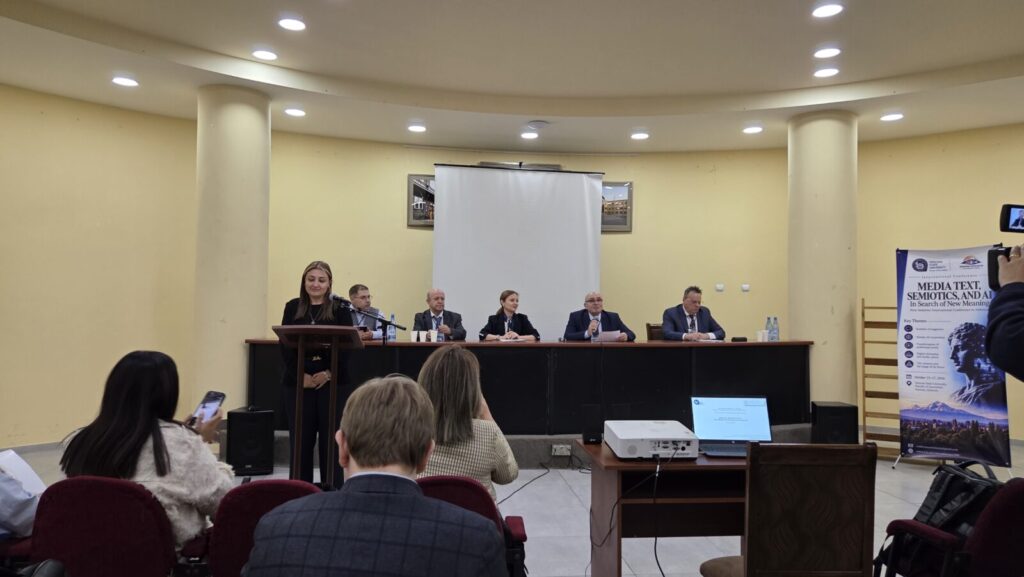
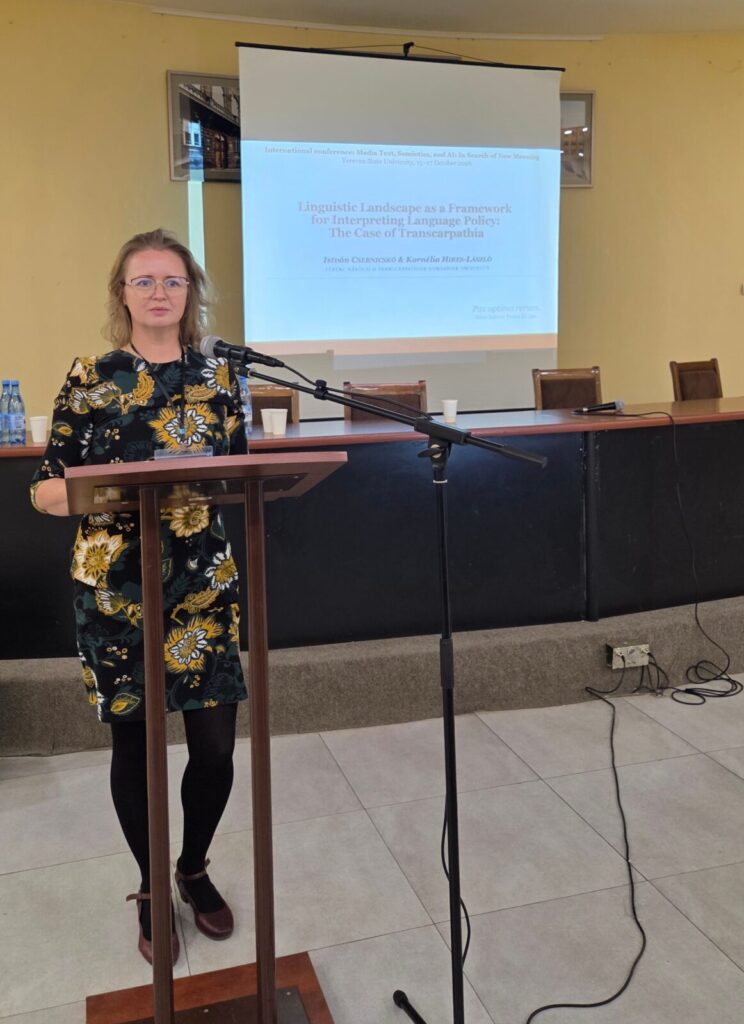
István Csernicskó, Rector of Ferenc Rákóczi II Transcarpathian Hungarian University, and Kornélia Hires-László, Head of the Antal Hodinka Research Centre for Linguistics, presented their joint presentation, “Linguistic Landscape as a Framework for Interpreting Language Policy: The Case of Transcarpathia”. Drawing on examples from Transcarpathia, they demonstrated how language policy decisions and initiatives by local communities and researchers shape the visibility of languages in public space.
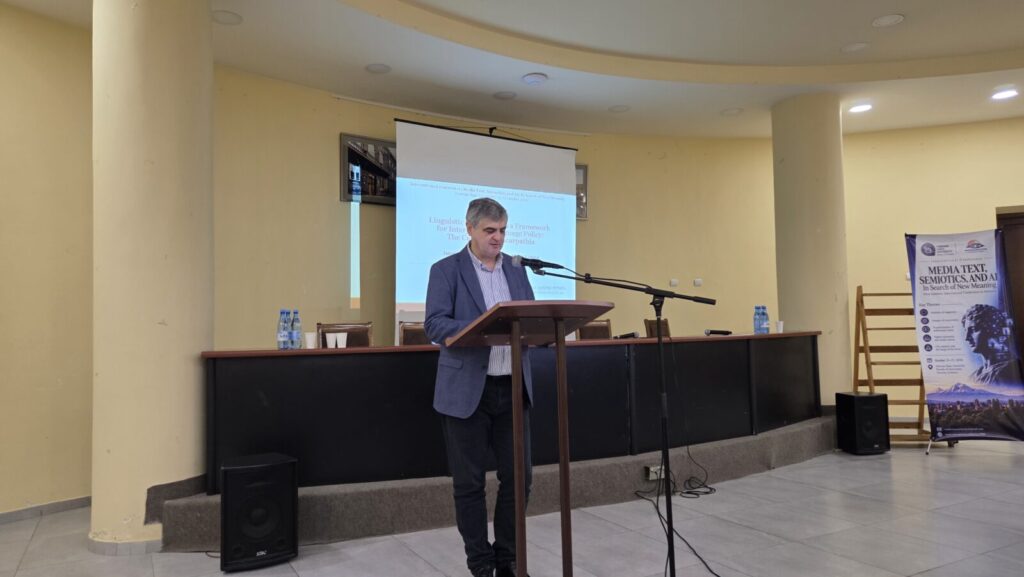
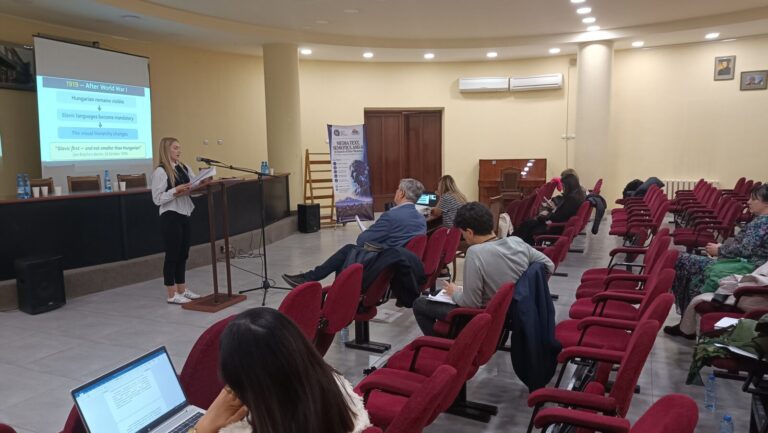
Anikó Beregszászi, Head of the University’s Department of Philology, and Adrienn Vig, a researcher at the Antal Hodinka Research Centre for Linguistics and a final-year MA student in English at Rákóczi University, contributed a joint presentation entitled “From Language Policy to Semiotic Conflict”. Their presentation examined how political and social changes shape the meanings associated with languages and public signs, and how different communities may interpret the same signs in different ways.
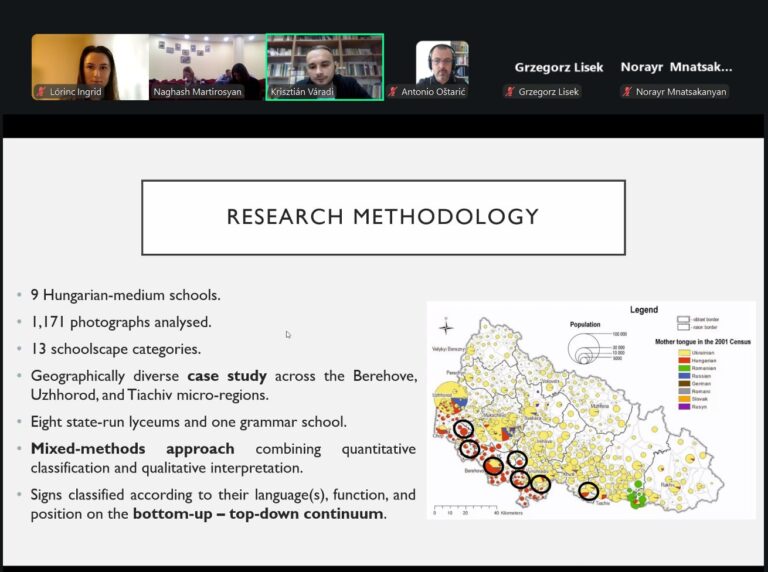
Krisztián Váradi, a staff member of the University’s Department of Philology and a researcher at the Antal Hodinka Research Centre for Linguistics, and Ingrid Lőrinc, a researcher at the Centre, delivered a joint online presentation entitled “Schoolscape, Minority Education, and Visual Bilingualism in Transcarpathian Hungarian Schools”. They explored the relationships between school linguistic landscapes, minority education, and visual bilingualism, highlighting the role of languages displayed in school spaces.
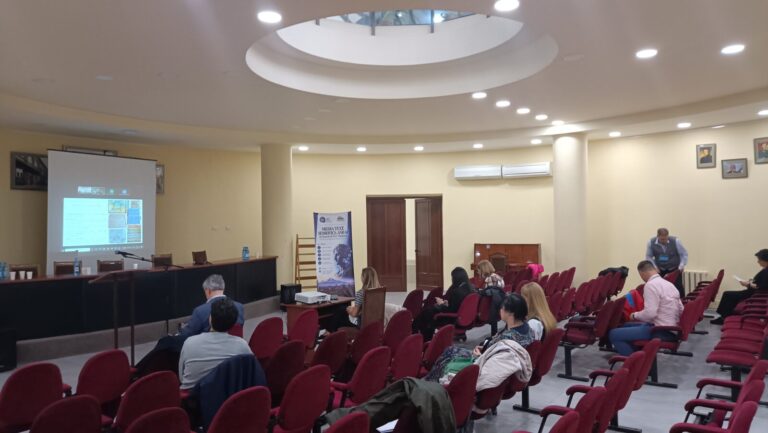
In addition to presenting their research, István Csernicskó and Kornélia Hires-László each chaired a block of presentations within the panel on the semiotics of linguistic landscapes and their representation in media.
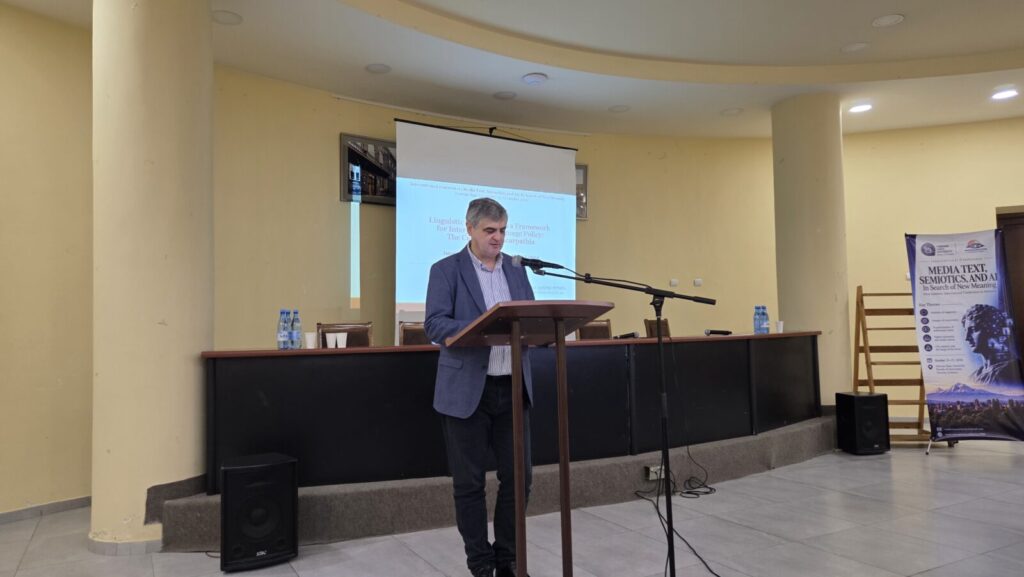
The conference provided an opportunity to showcase research conducted at Rákóczi University and the Antal Hodinka Research Centre for Linguistics, exchange academic experience, and strengthen scholarly connections. The presentations brought perspectives from Transcarpathia into the international academic dialogue on multilingualism, language policy, and minority education.