
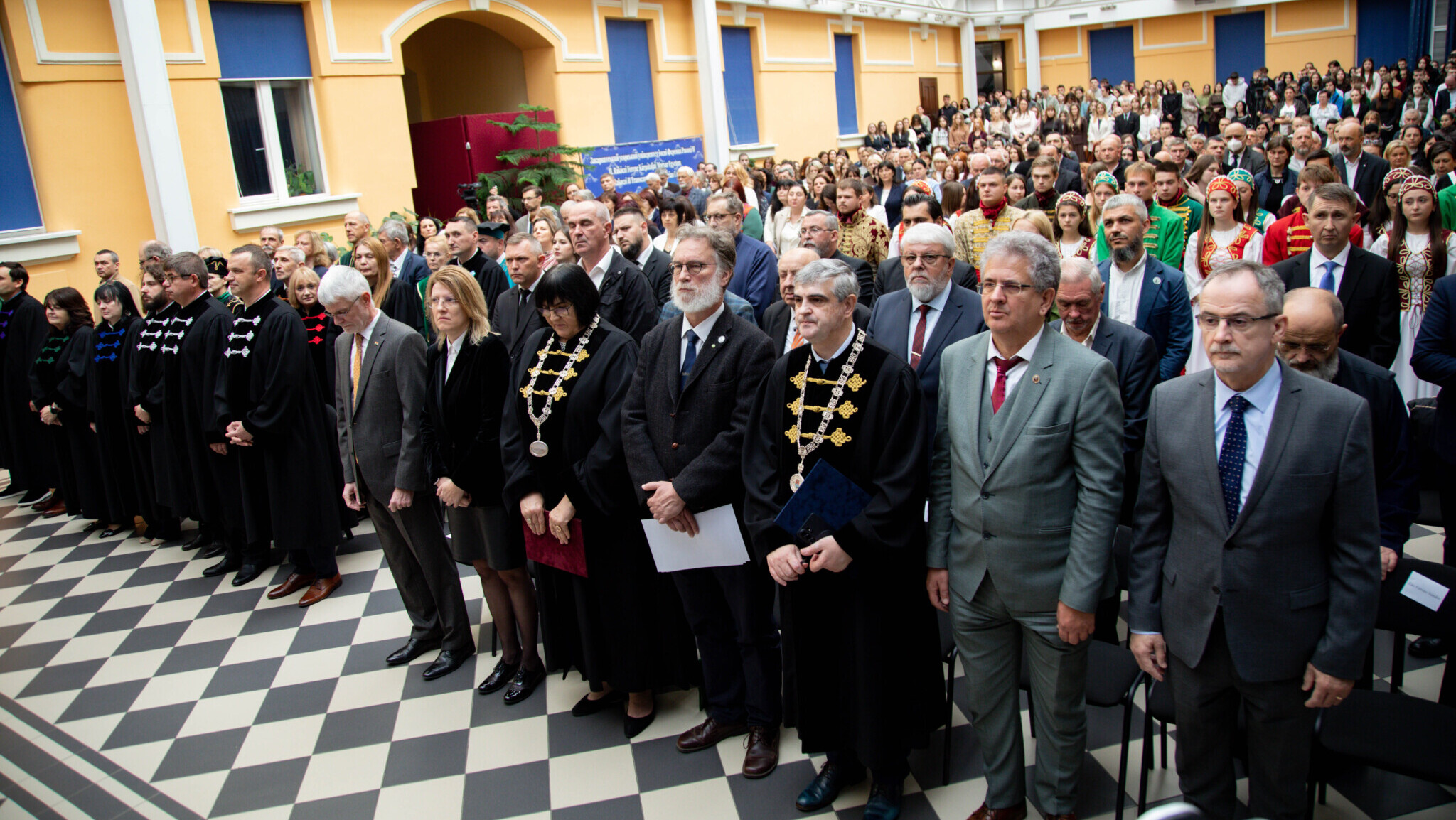
Thirty years ago, in September 1996, a dream began to turn into reality: the Transcarpathian Hungarian Teacher Training College opened its doors to provide opportunities for learning, development, and the pursuit of science in the mother tongue. Over the three decades that have passed since then, the institution has become a defining place for generations in acquiring knowledge, fostering a sense of community, and prospering in their homeland. The institution became the Ferenc Rakoczi II Transcarpathian Hungarian College in 2003, and attained university status on October 1, 2025. While the name and status have changed, the core mission has remained constant throughout: to impart knowledge, create value, and build a future for the Transcarpathian Hungarian community. The University of Rakoczi celebrated the 30th anniversary of its existence on October 29.
The event opened with the ceremonial entry of the historical flags of Transcarpathia, followed by our university’s anthem, Rakoczi’s prayer, performed with the participation of our institution’s chamber choir.
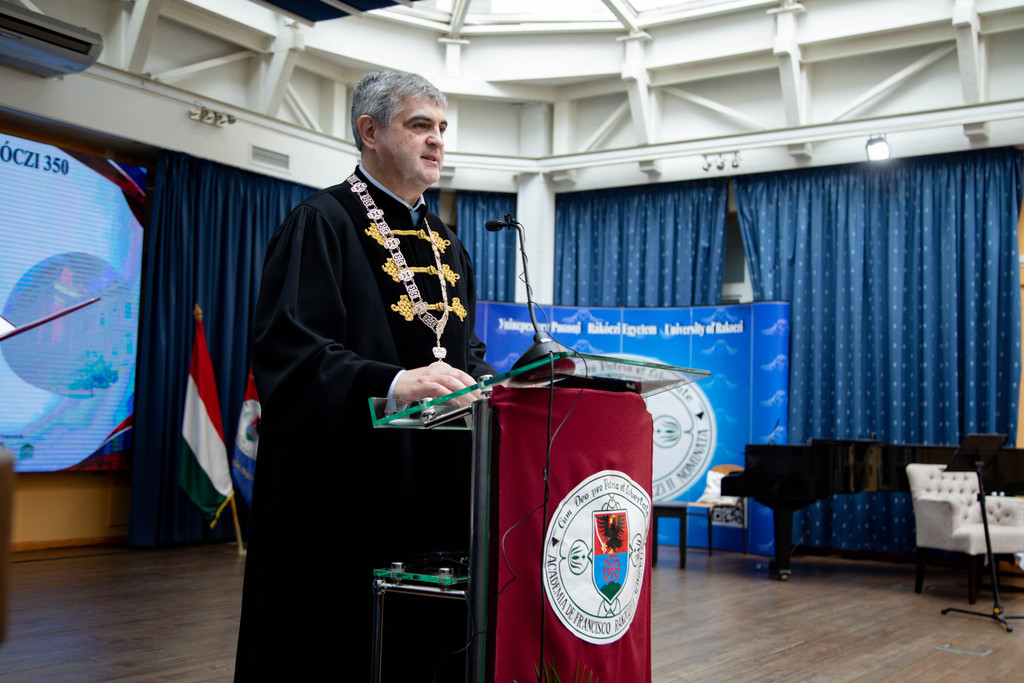
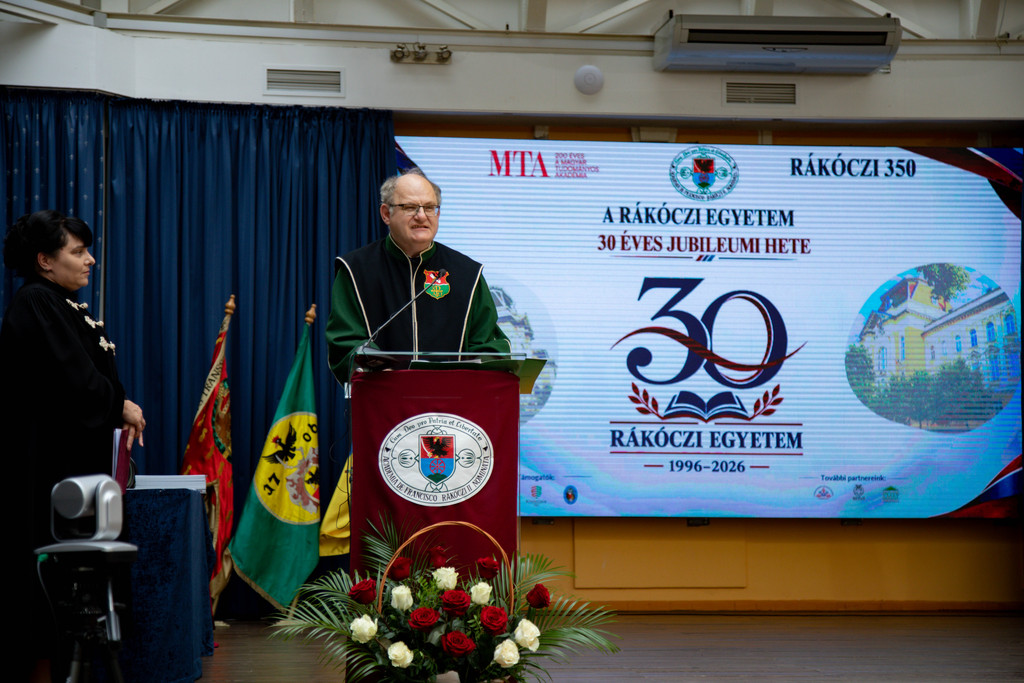
Those present were welcomed by István Csernicskó, Rector of our university. He recalled the most important milestones of the institution’s three-decade history, as well as the dedication of the founders and the achievements of the university’s development. As he stated, the institution began its operations in 1996 with four academic programs and 74 students, and has now grown into a university offering 34 degree programs across seven fields of study. He emphasized that the institution plays a significant role in the life of the Transcarpathian Hungarian community, as its graduates work in numerous educational institutions, businesses, public organizations, and research centers across the region. He expressed his gratitude to the founders, paying special tribute to the role of Ildikó Orosz, as well as to the work of former rectors, faculty members, researchers, and staff. He also conveyed his gratitude to supporting organizations and to Hungary, which contributed to the survival and development of the institution.
“I say we stand on solid ground, we have a foundation to build upon, and what is perhaps more important, we have a reason and people for whom to continue,”
he concluded.
Following this, we heard a performance of an arrangement of Sándor Sasvári’s song, Among the Carpathians, performed by Szilveszter Ferku, Boglárka Ferku, and Dávid-Lajos Mándy.
“Today is a victory celebration for the Hungarians of Transcarpathia. We dreamed big, and perhaps that is what helped us break through the wall towering before us. The work, perseverance, and tenacity of many people are embodied in this victory,”
stated Sándor Milován, Honorary President of the Transcarpathian Hungarian Cultural Association (KMKSZ), in his letter of remembrance.
Next, we heard the youth song If I look back at the road traveled, performed by Marianna Györkené Csákány, an instructor at the Tulipán Tanoda Hungarian School of Folk Music and Folk Art.
We then paid tribute to those individuals who are no longer with us but were defining figures in building the institution: Sándor Fodó, former President of KMKSZ; Lajos Gulácsy, Bishop of the Transcarpathian Reformed Church; Rector Kálmán Soós; Rector József Szikura; István Pataki, former Mayor of Beregszász; József Zsupán, former Mayor of Beregszász; István Kiss, Vice-Director of the Transcarpathian Hungarian Teacher Training College; Vice-Rector Jenő Barkáts; and Árpád János Potápi, former State Secretary for Nation Policy.
Following this, the chamber choir of the University of Rakoczi performed Pie Jesu by Andrew Lloyd Webber.
“Today’s jubilee is far more than an anniversary. It is a celebration of the perseverance, proactive strength, and faith in the future of the Transcarpathian Hungarian community,”
stated István Kollai, Deputy State Secretary responsible for Hungarians living beyond the border, in his greeting letter, which was read by László Vida, Consul General of the Consulate of Hungary in Berehove. In his letter, he highlighted that the history of the university is an essential part of the Transcarpathian Hungarian community’s struggle for mother-tongue education, and that the institution has today become a defining intellectual hub in the region and a steadfast pillar for the Hungarians in Transcarpathia.
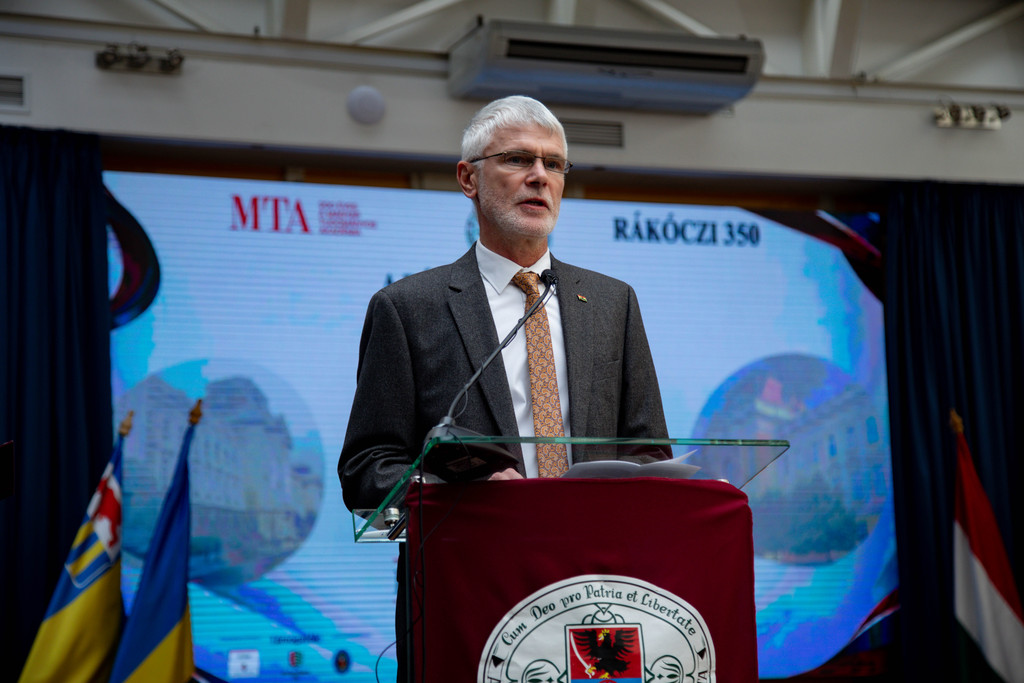
“The history of the University of Rakoczi is inseparable from the past thirty years of the Transcarpathian Hungarian community, and from the commitment to ensure conditions for mother-tongue education, scientific endeavor, and the training of intellectuals, even amidst changing and often unfavorable circumstances,”
emphasized Balázs Borsos, Vice President of the Hungarian Academy of Sciences (MTA).
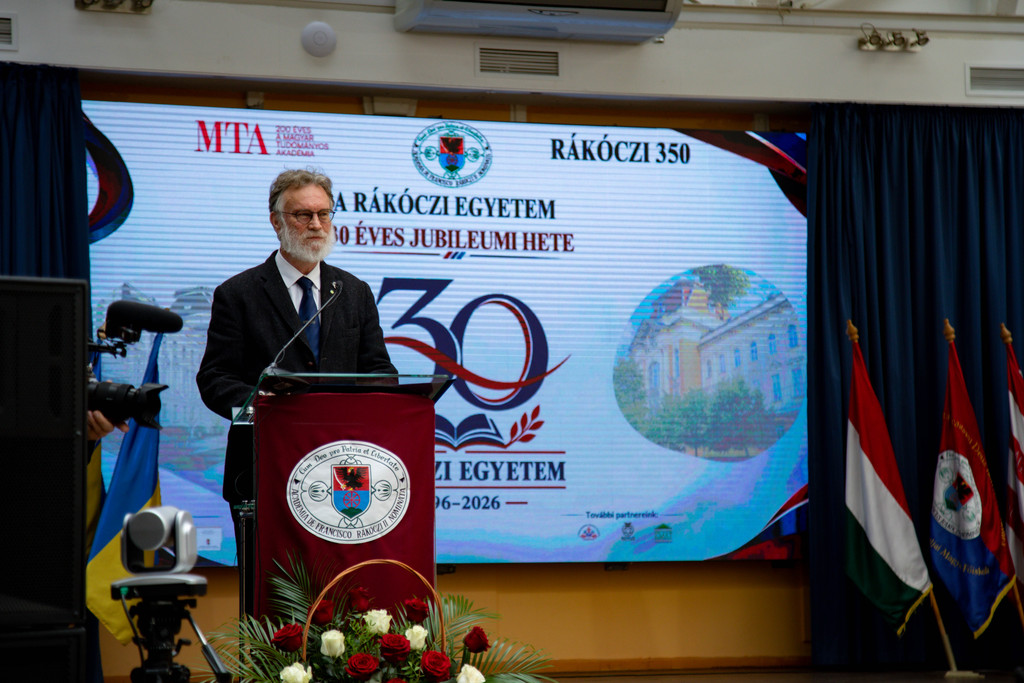
Gábor Flóra, Vice-Rector of the Partium Christian University, highlighted in his welcome speech that behind three decades of development lie the brave decisions of the founders, the dedication of leaders, the work of faculty and researchers, and the unwavering support of the Transcarpathian Hungarian community.
“Belonging to the future of our communities means ensuring that our youth can acquire modern, sustaining knowledge in their homeland, in their mother tongue, within an independent Hungarian university framework,”
he stated.
Following the greetings, Marianna Györkené Csákány performed a musical setting of Léna Losonczy’s poem Gratitude.
Next, commemorative anniversary plaques were presented to individuals and entities who supported and represented the cause of our institution: the Government of Hungary, the Ministry of Community Relations and Culture, the Ministry of Education and Children’s Affairs, the Consulate of Hungary in Berehove, the Hungarian Academy of Sciences, the MTA Hungarian Science Abroad Presidential Committee, and the Secretariat of Hungarians Living Abroad.
Following the presentation, Imre Holozsai, an instructor at the Tulipán Tanoda Hungarian School of Folk Music and Folk Art, performed Béla Bartók’s song I set out from my fair homeland. He was accompanied on accordion by Bertalan Halász and Nikoletta Halász, instructors at the Tulipán Tanoda Hungarian School of Folk Music and Folk Art.
Commemorative plaques were presented to the founding organizations: the Transcarpathian Hungarian Cultural Association, the Transcarpathian Hungarian Pedagogical Association, the City Council of Berehove, the Transcarpathian Reformed Church, and the Charity Foundation for the Transcarpathian Hungarian University.
Commemorative plaques were also received by church and community organizations: the Transcarpathian Roman Catholic Diocese and the Greek Catholic Eparchy of Mukachevo.


Following the ceremony, Eszter Sass, a student at the Department of Philology, performed László Lator’s poem On the border.
Commemorative plaques were awarded to partner institutions: the University of Debrecen, the Reformed Theological University of Sárospatak, the Archiepiscopal College of Veszprém, John von Neumann University, the Partium Christian University, J. Selye University, Constantinus the Philosopher University in Nitra, Uzhhorod National University, and the Transcarpathian Academy of Arts.
Following the presentation, Béla Bartók’s Romanian folk dances was performed. András Király, Director of the Piyterfolvo Art School, performed on violin, accompanied on piano by Kamilla Bíró, a piano teacher at the institution.
Commemorative plaques were awarded to scientific, cultural, professional, and civil partners: the Jósa András Museum, Pro Cultura Subcarpathica, the Transcarpathian Regional Hungarian Drama Theatre, the Tivadar Lehoczky Transcarpathian Regional Museum of Local History, the Imre Révész Society of Transcarpathian Hungarian Fine and Applied Artists, the “GENIUS” Charitable Foundation, the Carpathian Biosphere Reserve, the Transcarpathian Institute of In-Service Teacher Training, the Transcarpathian Hungarian Tourism Council, the Transcarpathian Hungarian Large Families Association, the Youth Organization of the Transcarpathian Hungarian Cultural Association, the Transcarpathian Reformed Youth Organization, the Greek Catholic Youth Organization, the Elemér Ortutay Greek Catholic Center, as well as the Archives and Museum of the Transcarpathian Reformed Church.
Following the presentation, Nikoletta Halász and Bertalan Halász performed Dvilyansky’s Hungarian czardas.
Commemorative plaques were presented to individuals who worked tirelessly behind the scenes: Krisztina Oláh and András Jávor. Commemorative plaques were also awarded to relief organizations and businesses: the Order of Malta Charity Service of Berehove district, St. Anne Caritas of Berehove, the Transcarpathian Baptist Charity Foundation, the Association of Border Municipalities of Transcarpathia, the Diaconal Office of the Transcarpathian Reformed Church, the Ukrainian-Transcarpathian Branch of the Interchurch Aid, the NGO NEEKA Carpathian Region, the Kiscsikó Canteen, and the Ham-lett Eatery. Commemorative plaques were awarded to media outlets that have reported on the institution’s activities since its inception: TV21 Ungvár, Kárpátalja weekly, the Kárpátalja.ma news portal, Kárpátinfo weekly, Karpatskiy Obyektiv, karpat.in.ua, Kárpáti Igaz Szó, and Pulzus Radio.


Following the presentation, Boglárka Botos, an instructor at the Tulipán Tanoda Hungarian School of Folk Music and Folk Art, performed Johannes Brahms’ Hungarian dances.
A commemorative plaque was presented to Otília Füzesi, Chief Accountant of our university, who has been a member of the institution from the very beginning. Subsequently, silver diplomas were awarded to former students majoring in primary education who graduated in 2001, thus being the first to receive degrees issued by our institution.
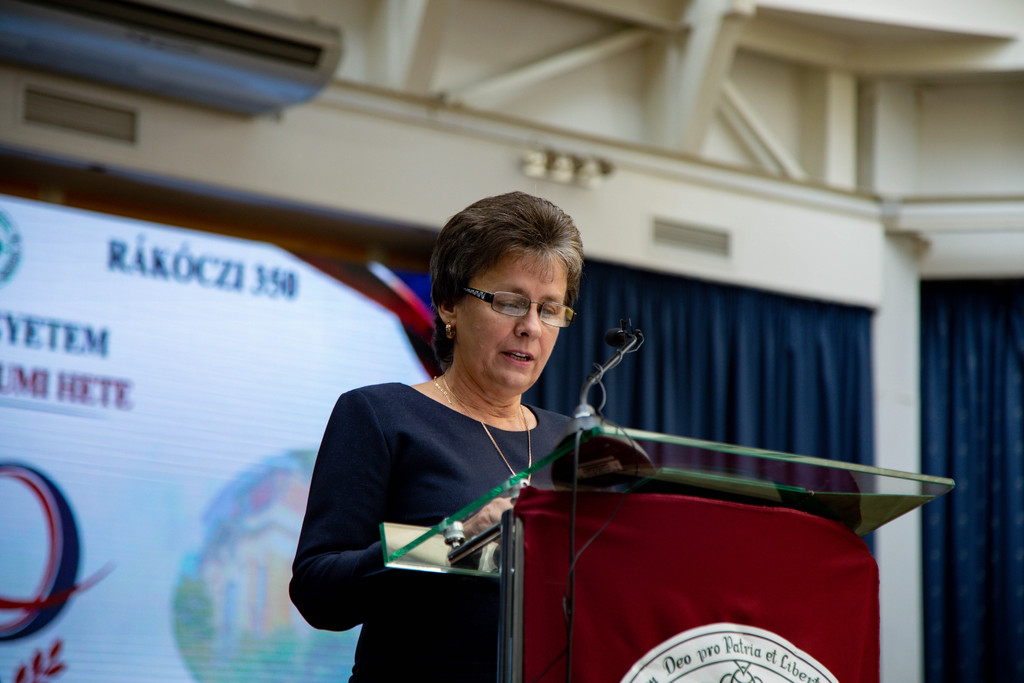
“University years are not only about what we learn from books, but also about learning to ask questions, to think, to take responsibility, to persevere in difficult times, and to believe that the knowledge acquired has purpose and significance,”
emphasized alumna Erika Kovács, as she recalled her college years, which were spent in a family-like atmosphere.
Following this, Szilveszter Ferku and Dávid-Lajos Mándy performed the song A hundred roads by the band Emberek.
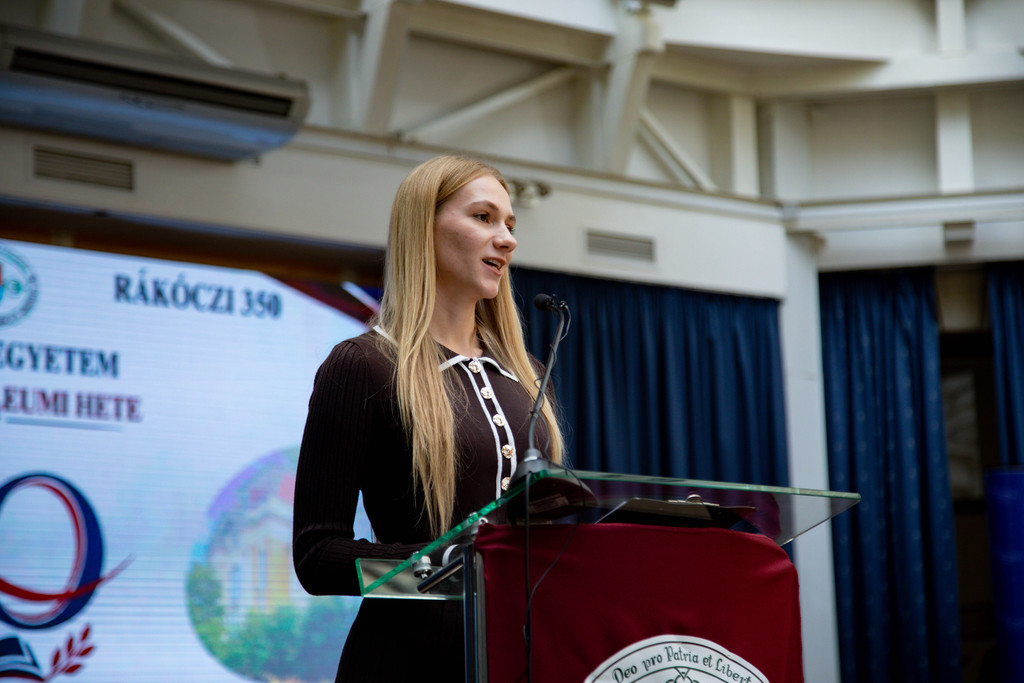
“The university showed us that we do not necessarily have to look elsewhere for opportunities. It is worth making plans, setting goals, and believing that there is a reason for us to stay here as well,”
said Adrienn Víg, a current student at the Department of Philology, as she recounted her student years.
Next, our university’s chamber choir performed George Gershwin’s Clap yo’ hands!.
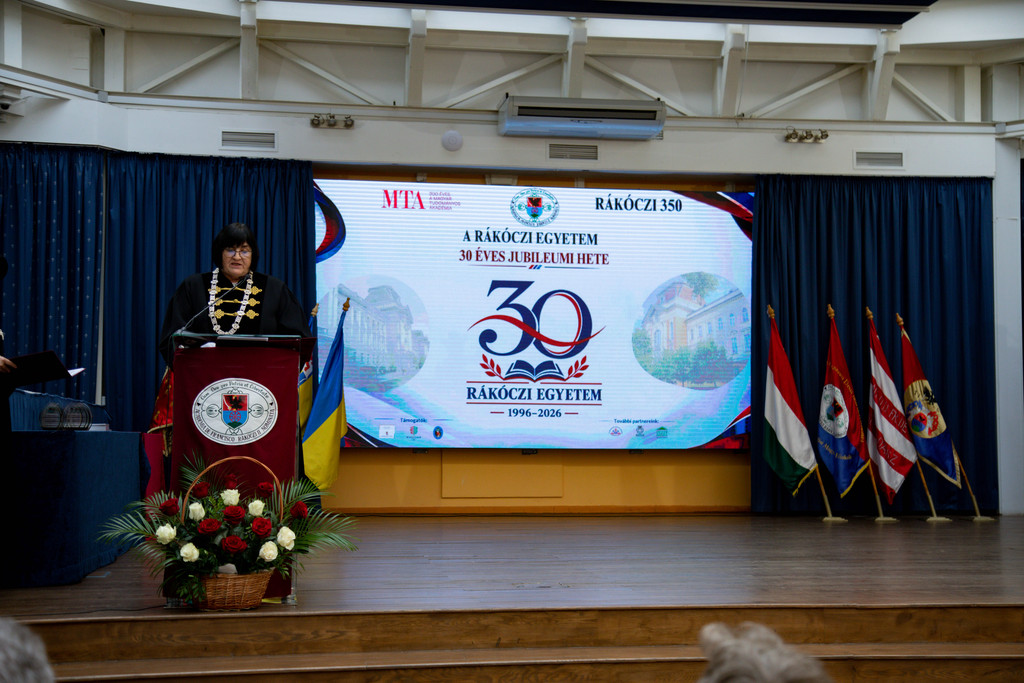
Ildikó Orosz, President of our university, in her address recalled the circumstances surrounding the founding of the institution, the initial hardships, and the most important milestones of the past three decades. In her speech, she emphasized that the history of the university is a story of perseverance, solidarity, and the Transcarpathian Hungarian community’s commitment to mother-tongue education.
“When it is dark, it is up to us to light the candle. When the world is creaking and groaning, our university must be an island of stability,”
she concluded in her address.
Following this, representatives of historical churches requested God’s blessing.
Finally, the folk dance group from the Tulipán Tanoda Hungarian School of Folk Music and Folk Art, based at the Gábor Dayka Lyceum in Uzhhorod, performed children’s traditional games from the Rábaköz region.
The celebration concluded with the singing of the Hymn.
Anita Kurmay

