
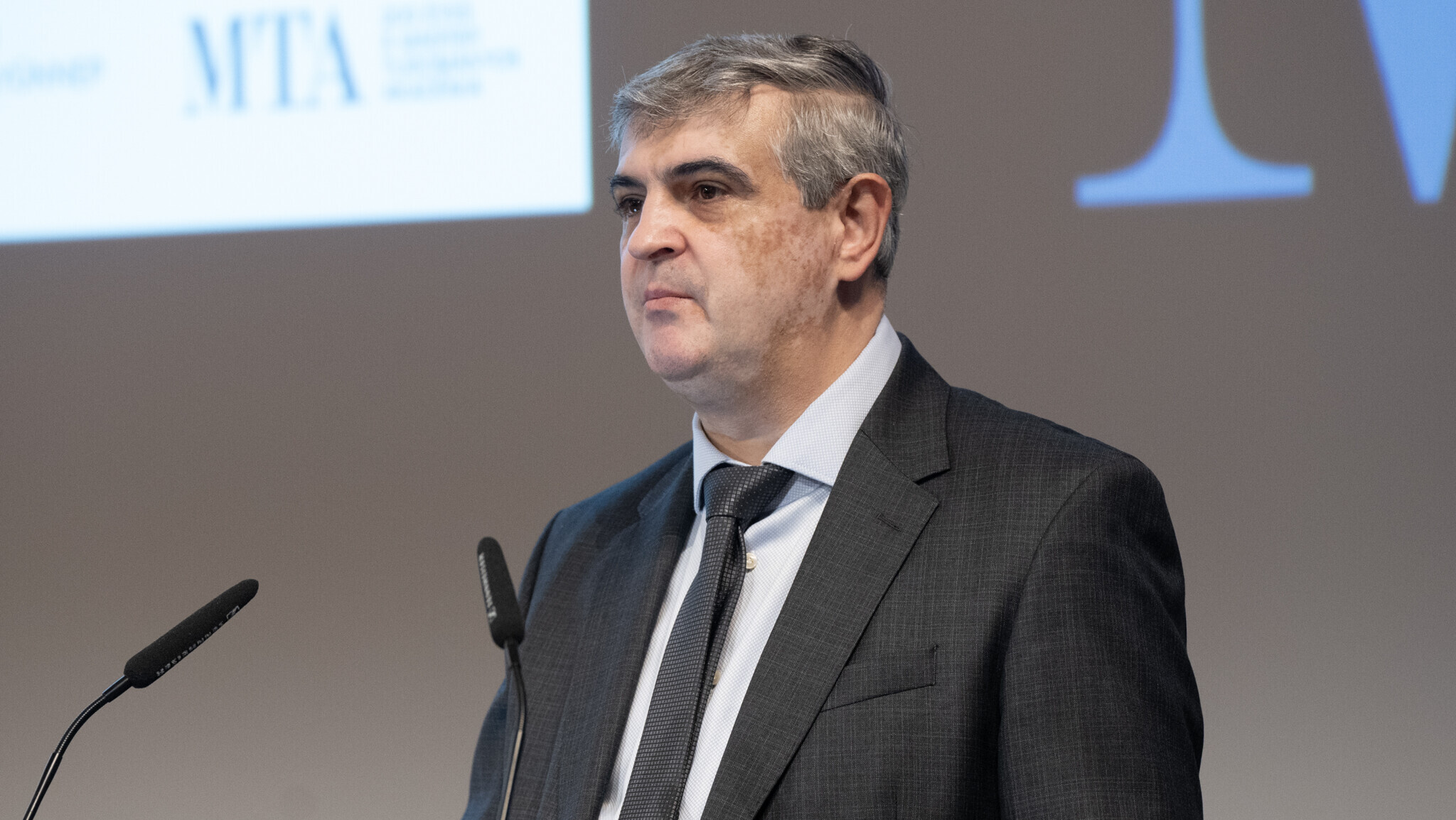
On 4 November 2026, the Hungarian Academy of Sciences (MTA) hosted a prestigious scientific conference entitled Forces and Alliances (Hatóerők és szövetségek) in Budapest, as part of the concluding events celebrating the Academy’s 200th anniversary. The opening scientific lecture was delivered by István Csernicskó, Rector of Ferenc Rakoczi II Transcarpathian Hungarian University and an external member of the Hungarian Academy of Sciences, representing the Hungarian academic community beyond Hungary’s borders.
The conference took place in the Grand Hall of the Hungarian Academy of Sciences as part of the annual Celebration of Hungarian Science. The event was opened by Academician Gábor Kecskeméti, Secretary-General of the Academy and Chair of the MTA200 Presidential Committee.
Representing the Academy’s Presidential Committee for Hungarian Science Abroad, Professor Csernicskó delivered a lecture entitled “One Right, Many Paths: Changing Models of Minority-Language Education in Europe.”
His presentation introduced findings from a comparative language policy research project examining the legal frameworks governing minority-language education across 22 European countries. The study explores how different national legal systems regulate the language of instruction for national minorities and how educational language rights evolve in response to political and legislative changes.
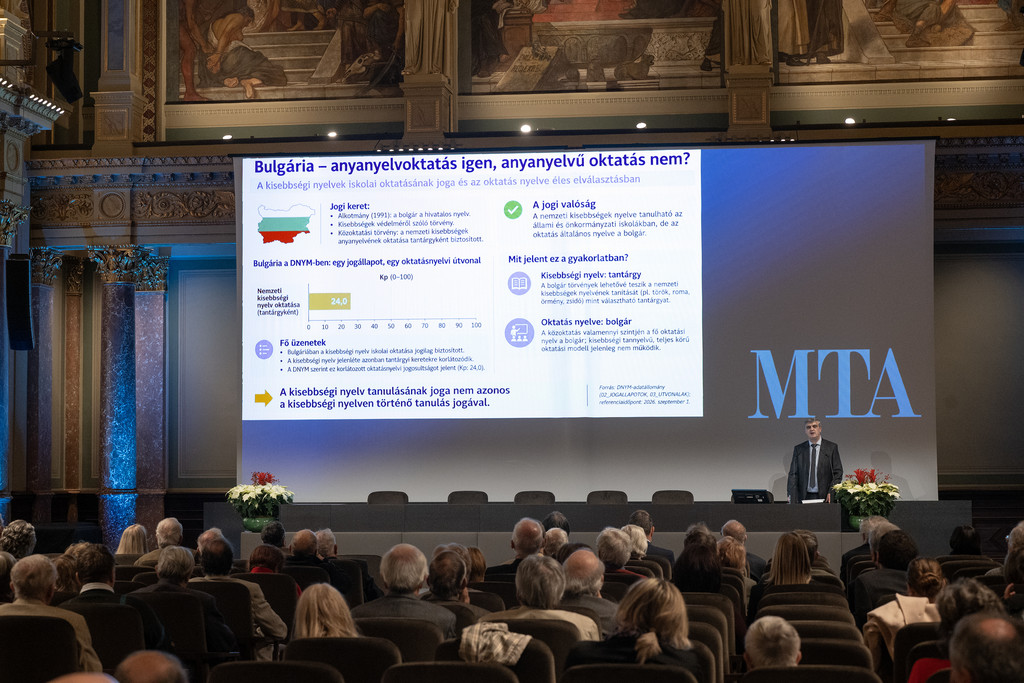
The dynamic comparative model presented in the lecture distinguishes between the formal recognition of educational rights and the actual legal opportunities available for receiving education in minority languages. By examining different national approaches within a common analytical framework, the research contributes to a broader understanding of linguistic diversity, minority rights and education policy in Europe.
The conference brought together distinguished scholars representing various disciplines, including linguistics, history, mathematics, physics, biology and medicine. Presentations highlighted major scientific achievements and the importance of cooperation across disciplines, institutions and national borders.
The invitation to deliver the opening scientific lecture at one of the concluding events of the Hungarian Academy of Sciences’ bicentenary celebrations represents a significant recognition of Rákóczi University’s academic contribution. It also highlights the role of Transcarpathian Hungarian researchers within the wider international scientific community and the importance of maintaining academic networks across borders.
For Ferenc Rakoczi II Transcarpathian Hungarian University, the occasion reflects its commitment to internationally relevant research, academic cooperation and the advancement of scholarship in a multilingual and multicultural European environment.
The full conference programme is available on the official website of the Hungarian Academy of Sciences.

