
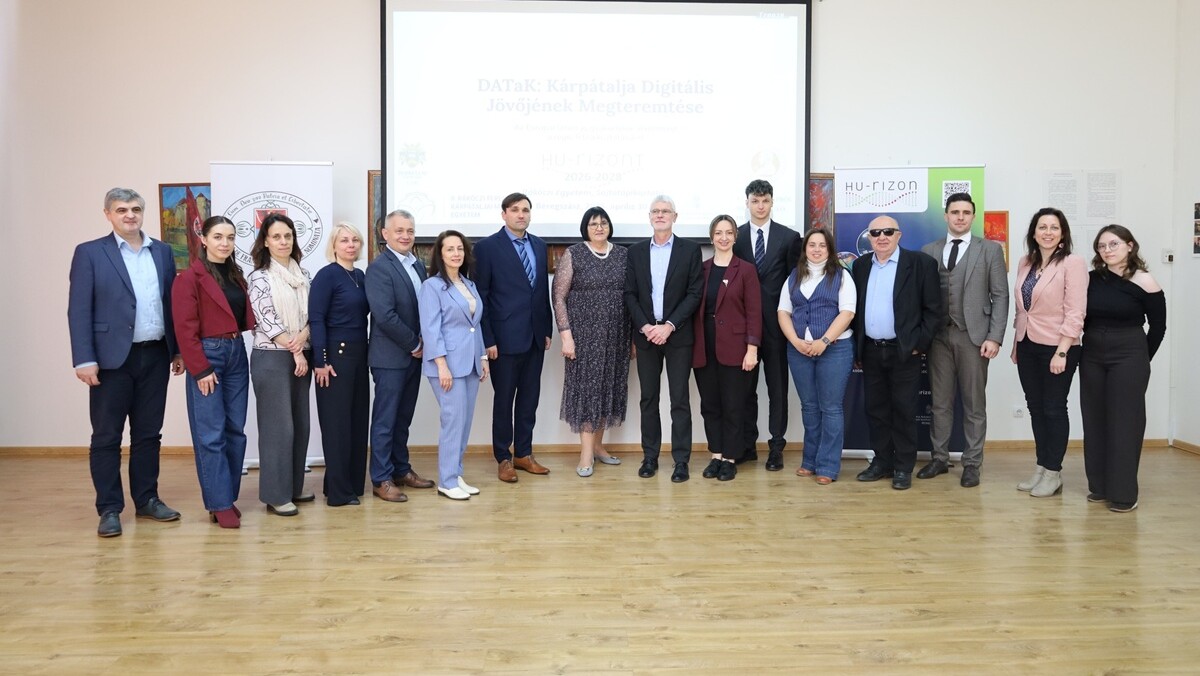
The project HU-RIZONT: Digital renewal in Transcarpathia: a development project based on European models aims to support the digital transition in Transcarpathia by adopting the best practices of the European Union. The goal of the initiative is to encourage and strengthen the region’s digital transition through the adaptation of best practices already successfully implemented in EU member states. The press conference for the initiative was held on April 30 at the Ferenc Rakoczi II Transcarpathian Hungarian University.
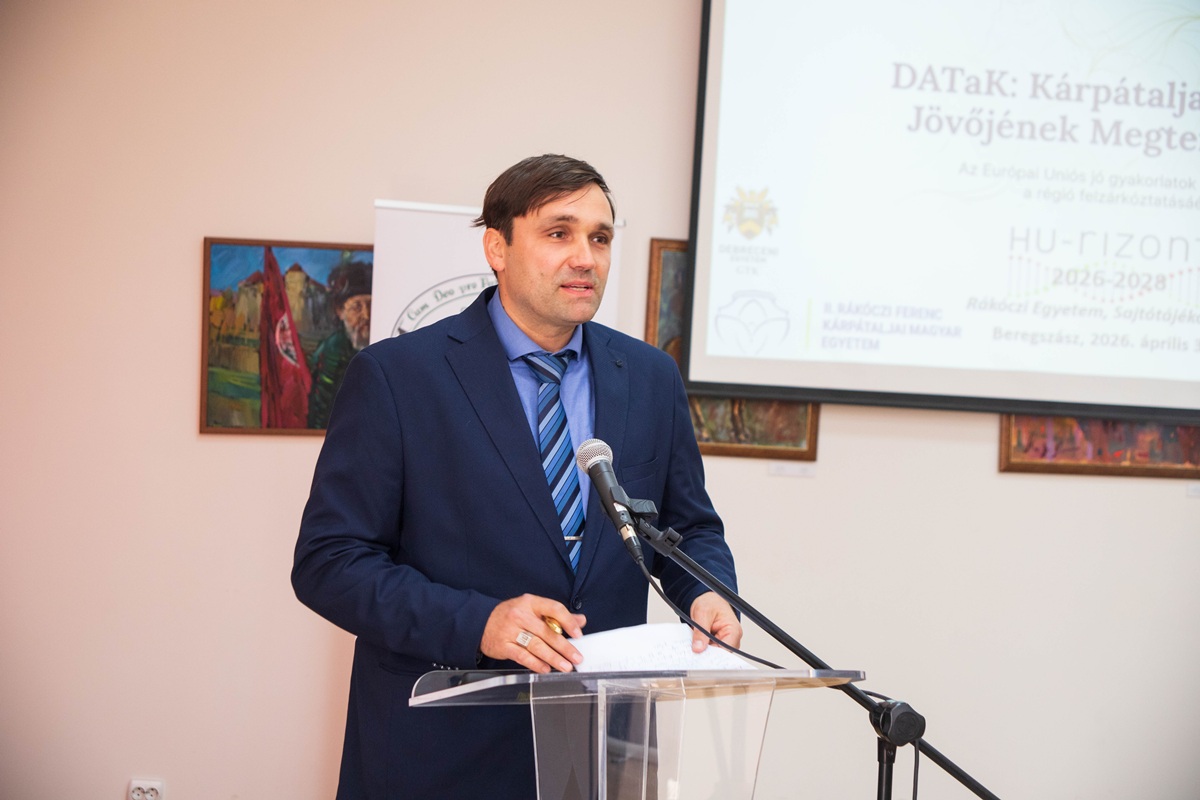
The attendees were greeted by Róbert Bacsó, Head of the Department of Accounting and Auditing at the University of Rakoczi.
“We owe a debt of gratitude to the Hungarian government for opening the application opportunity to institutions beyond the borders within the framework of the HU-RIZONT International Research Excellence Cooperation Program. The program set a high professional standard, requiring not only the creation of a strong research team but also the establishment of international collaborations. The goal of the project is to apply best practices in the field of digitalization that can be utilized in local governments, businesses, and the training of young professionals alike. An important objective of ours is that the research should not only be theoretical but also yield practical results,”
he highlighted.
Veronika Fenyves, Dean of the Faculty of Economics and Business at the University of Debrecen, drew attention to the importance of digitalization in her greeting.
“Digitalization and its impact on the future are on everyone’s minds. In addition, practice-oriented training is very important to us, as is thinking together with our corporate partners; according to our plans, we also intend to produce internationally recognized publications,”
she said.


Following the greetings, Gábor Pataki, Assistant Professor at the Department of Accounting and Auditing of the University of Rakoczi, presented the main pillars of the program:
- Digital Municipalities: A multilingual mobile and web application system will be created to support the digital development of border micro-regions. The aim of the development is to make local services easily accessible digitally, independent of state structures.
- Digital Business (e-incubator house): A digital platform will be established to support micro and small enterprises, providing complex support such as grant application consulting, project management, accounting, taxation, and auditing services. Additionally, priority will be given to the development of financial cybersecurity to ensure that local businesses can operate safely in the digital space.
- Young Digital Citizen: Training and mentoring programs developed for young people aim to increase security awareness. The goal is for them to become not just users, but active, conscious shapers of the digital world.
The project contributes to the digital integration of Transcarpathia, the strengthening of cross-border cooperation, as well as the increase of social cohesion and economic stability.
The Ferenc Rakoczi II Transcarpathian Hungarian University, the Pavol Jozef Šafárik University, and the University of Debrecen Faculty of Economics and Business participate in the implementation of the project.
K. A.

