
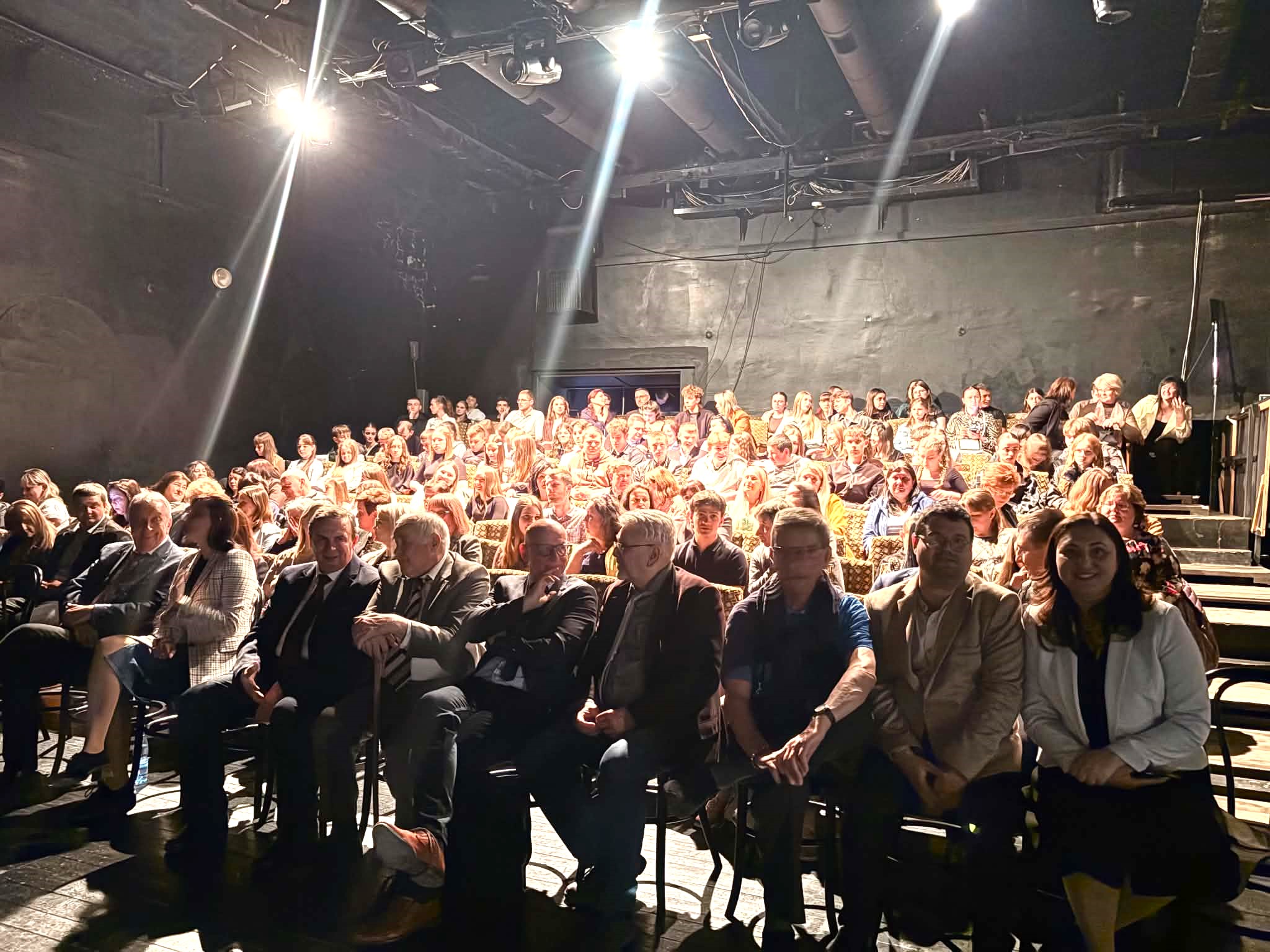
In the realm of scientific events, professional lectures, research findings, and academic discourse often take centre stage. However, a truly value-creating scientific event aims to resonate not only with the intellect but also with the emotional and cultural sensibilities of the individual. This philosophy was reflected in the programme of the 9th Scientific Debate Afternoon, organised by the Ferenc Rakoczi II Transcarpathian Hungarian University with the support of the National Talent Programme of the Ministry of Culture and Innovation. As a cultural accompaniment to the event, attendees were invited to view Lélektánc (Soul Dance), a lyrical, interdisciplinary performance presented at the Transcarpathian Regional Hungarian Drama Theatre.
The presence of the cultural programme held particular significance, as science and art are, in reality, not separate spheres but rather complementary forms of human thought and self-expression. Whilst science seeks to understand the world, art endeavours to experience and convey it. Consequently, a cultural performance accompanying a scientific debate afternoon is not merely an element of entertainment; it further deepens the message of the event in both an intellectual and spiritual sense.
Lélektánc proved a particularly fitting choice for the occasion. The performance was built upon a unique synthesis of literature, music, and physical theatre, portraying the world of human relationships, emotions, and inner struggles with sensitivity and artistic nuance. Throughout the evening, works by classic Hungarian poets—including Attila József, Lőrinc Szabó, and Sándor Petőfi—were presented, providing not only an aesthetic experience but also enriching the event’s participants with profound intellectual content.


On stage, the production’s visionary, director, and performer, Natália Gál, alongside Antónia Turóczy and Lajos Pércsi, portrayed the various facets of love, human relationships, and internal psychological struggles with sensitivity and authenticity. The choreography played a decisive role, guided by Enikő Orosz and Péter Orosz, leaders of the Transcarpathia Dance Ensemble, who translated the emotional depth of the literary texts into the language of dance to create a unique theatrical atmosphere. The multidisciplinary nature of the performance was further enriched by the work of the contributing artists appearing via recording: through the collaboration of Attila Ferenczi, Anita Polyák, Dóra Mónus, Jázmin Heczel, Ilka Sipos, Dániel Séra, Tamás K. Jakab, Szilvási Szilárd, Gergő Puskás, and József Varga, the performance became a lyrical, dynamic, and emotionally profound theatrical experience.
The cultural programme of the Debate Afternoon highlighted that the scientific community requires occasions that extend beyond professional frameworks, providing opportunities for shared experiences, the strengthening of human connections, and the celebration of common cultural values. The presence of art eased the formality of the scientific discourse while simultaneously rendering the event as a whole more elevated and human-centred.
The event once again demonstrated that science and culture are mutually reinforcing values. The organisers held that a scientific debate afternoon becomes truly complete when it not only imparts new knowledge but also builds community, evokes emotions, and provides a cultural experience for its participants. The performance of Lélektánc contributed fittingly to this experience, enriching the attendees with lasting intellectual and spiritual value.
We would also like to take this opportunity to thank Edina Sin, Director of the Transcarpathian Regional Hungarian Drama Theatre, for this opportunity.

Natália Váradi,
Ferenc Rakoczi II Transcarpathian Hungarian University

