
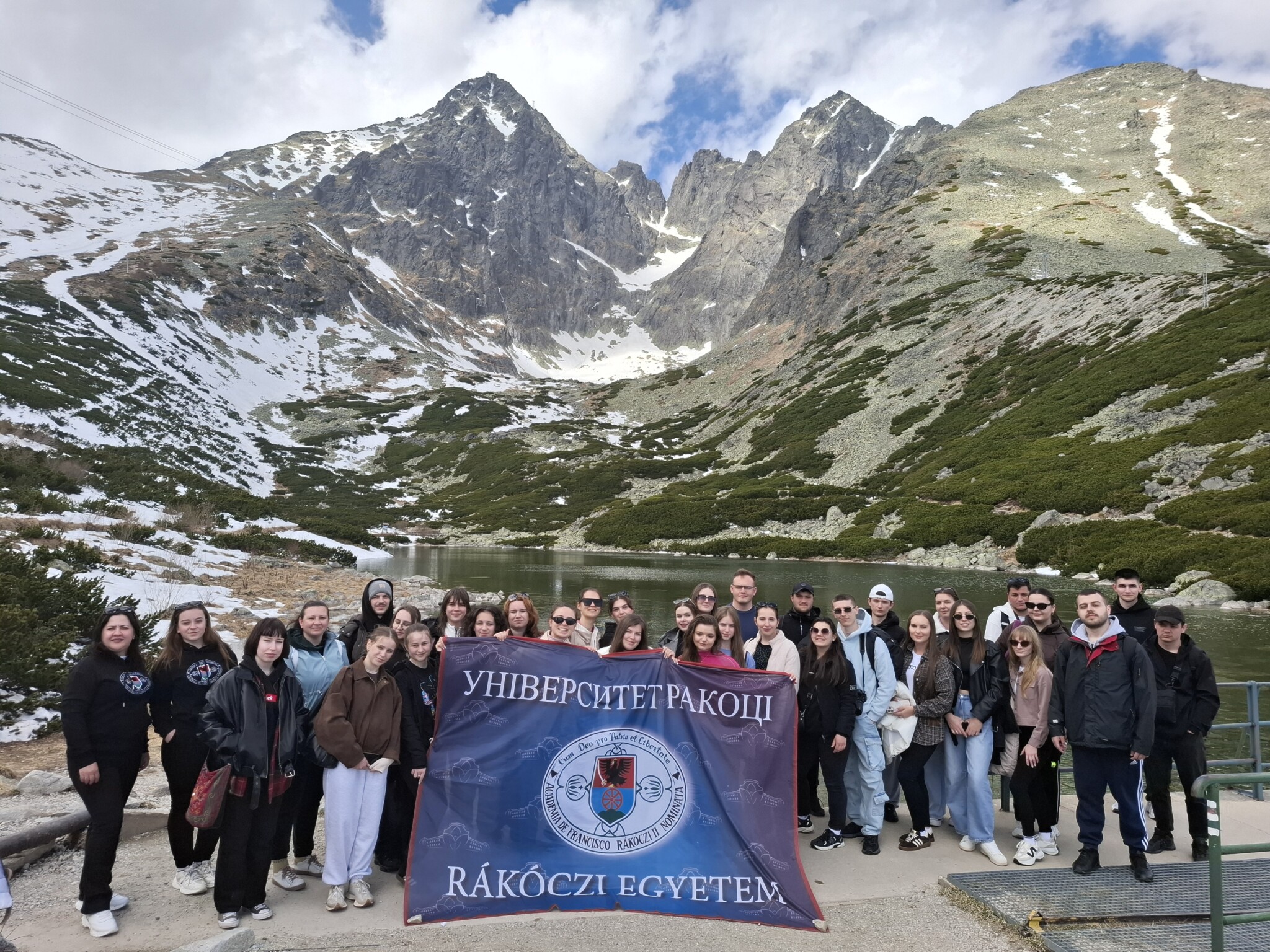
Every year, students enrolled in the Tourism and Geography educational programmes participate in a country studies field practice. In 2026, the field practice took place in Hungary and Slovakia. Its main objective was to reinforce theoretical knowledge, develop professional competencies in the fields of tourism and geography, and familiarize students with the development of tourism infrastructure in Central Europe.
The field practice programme included visits to cultural, historical, educational, natural, and tourism sites, enabling students to gain a comprehensive understanding of current trends in the development of tourism and geography.
At the beginning of the programme, the participants visited the town of Sárospatak, where they became acquainted with its tourism and geographical characteristics. An important part of the programme was a visit to the Götz Wine Cellars, located in the historic Tokaj Wine Region, a UNESCO World Heritage Site. The estate was also awarded the title “Hungary’s Most Beautiful Estate 2023” (Magyarország legszebb birtoka 2023). During the visit, the students learned about winemaking technologies, local wine-making traditions, and the development of wine tourism as one of the leading tourism sectors in the region. Geography students also explored the geological and geomorphological features of the area and examined their influence on grape cultivation.


The next stage of the field practice focused on cultural, historical, and recreational attractions. The students visited the medieval Boldogkő Castle, where they studied the history of fortification architecture and its significance for the development of cultural tourism. They then visited the Zemplén Adventure Park, where they became familiar with the organization of active and sports tourism, as well as contemporary forms of tourism-related recreation. For the Geography students, particular attention was given to studying landscape characteristics and spatial planning.
The final stage of the field practice took place in Slovakia, in the High Tatras region. The students ascended by cable car and participated in a mountain hike. This part of the programme provided an opportunity to study the organization of mountain tourism, the infrastructure of hiking trails, and safety principles in high-mountain environments. In addition, the Geography students expanded their knowledge of altitudinal zonation, examined ancient glacial landforms such as cirques and moraines, investigated the characteristics of the alpine climate, and observed the impact of tourism on mountain ecosystems.
The country studies field practice became an important component of the professional training of students enrolled in the Tourism and Geography educational programmes. Combining theoretical knowledge with direct experience of the tourism, natural, cultural, and historical attractions of Hungary and Slovakia contributed to the development of professional competencies, broadened students’ perspectives, and provided valuable practical experience. The knowledge and skills acquired during the field practice will serve as a solid foundation for their further studies and future professional careers in tourism and geography while fostering a modern understanding of the sustainable development of tourism destinations.

