

About International Academic Mobility in Accounting and Financial Management in India
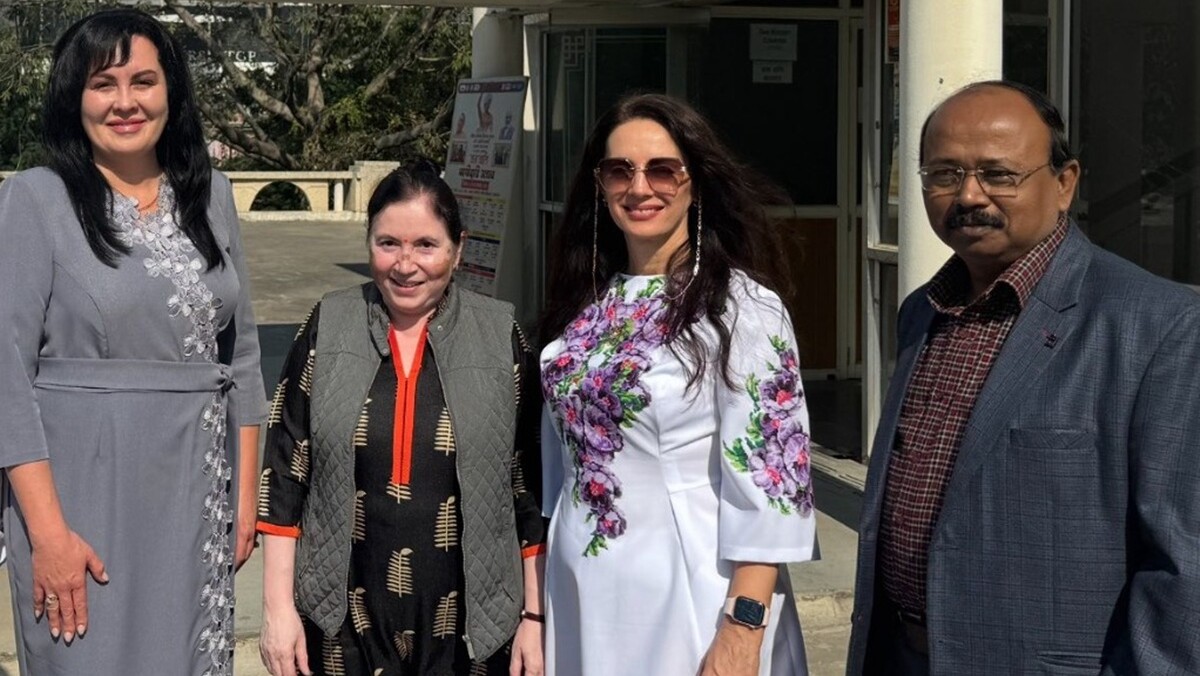
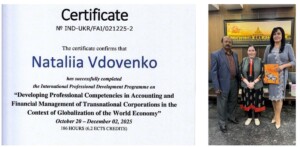
Between 20 October and 2 December 2025, the lecturers of the Department of Accounting and Auditing of Rákóczi University completed a joint training programme in India together with colleagues from the National University of Life and Environmental Sciences of Ukraine, within the framework of the current cooperation agreement between the institutions. The programme focused on developing professional competencies in accounting and the financial management of transnational corporations in the context of globalization. The results obtained will contribute to improving the content of educational programmes and strengthening academic and research cooperation between the universities.
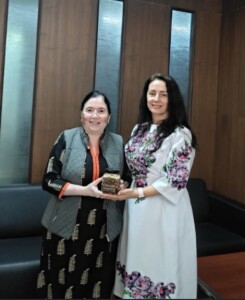
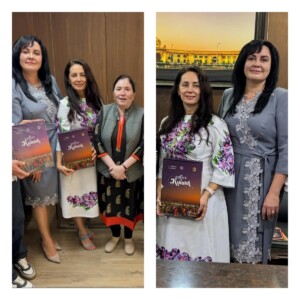
International academic mobility remains one of the priority areas for the development of every university department, which serves as the “cornerstone of a higher education institution.” It ensures integration into the global educational space, brings the best international practices into the learning process, and contributes to the training of a new generation of specialists. Within this activity, Doctor of Economics, Professor Nina POYDA-NOSYK (Ferenc Rákóczi II Transcarpathian Hungarian University) and Doctor of Economics, Professor Nataliia VDOVENKO (National University of Life and Environmental Sciences of Ukraine) took part personally in a training programme in Lucknow, India, organised with the support of Prof. Pankaj SRIVASTAVA (FAI, India). Both scholars prioritise the development of international academic mobility as a promising direction for preparing highly qualified specialists in finance and global economics.
Special attention during the training programme was devoted to the development and enhancement of the professional competences of academic staff, as the quality of higher education directly depends on their level of expertise and methodological preparation, which ultimately determines students’ competitiveness in the global labour market. Participants had the opportunity to integrate the latest theoretical and applied developments into the curriculum, modernise approaches to delivering lectures and practical classes, and strengthen the research component of their departments through international methodological frameworks and case-based learning.
Prof. Nina POYDA-NOSYK is the guarantor of the Bachelor-level educational programmes “Financial Security” and “Financial Protection” implemented at the University of Rákóczi (Berehove) within the specialty Finance, Banking, Insurance and Stock Market. Prof. Nataliia VDOVENKO is the guarantor of the Master-level educational and professional programme in the field of Social Sciences, Journalism and Information under the specialty Economics and International Economic Relations (by specialisation) (EPP “International Economics”).
Remote participation in the training programme on behalf of University of Rákóczi was also taken by Doctor of Economics, Professor Robert BACHO – guarantor of the Bachelor’s educational programme “Accounting and Taxation”, and Doctor of Economics, Associate Professor Viktoriia MAKAROVYCH – guarantor of the Master’s educational programme “International Accounting and Taxation” within the specialty “Accounting and Taxation”.
International academic mobility plays a leading role in shaping the professional competences of university teachers, enabling their involvement in the global educational and scientific community. Participation in international training programmes, academic exchanges, and mobility initiatives allows academics to adopt modern teaching methodologies, learn from the best global research practices, and deepen expertise in economics and finance. It also supports the implementation of the Agreement on Cooperation between the National University of Life and Environmental Sciences of Ukraine and the Ferenc Rákóczi II Transcarpathian Hungarian College of Higher Education dated 26 March 2025.
Through direct interaction with foreign educational institutions and professional communities, academic staff increase their ability to critically evaluate global development trends, introduce innovative approaches into the educational process, and strengthen the competitiveness of university study programmes.
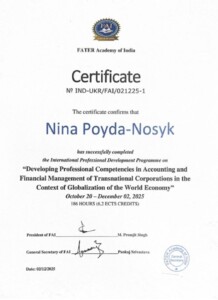
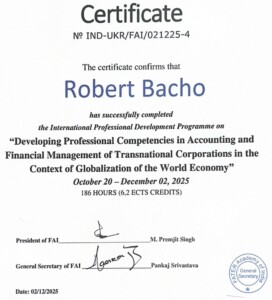
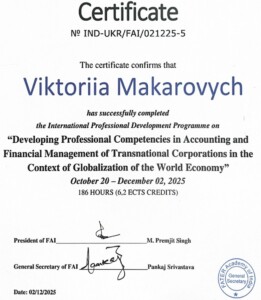
The training programme focused on studying modern approaches to transforming financial and business models of transnational corporations under the influence of globalisation; analyzing the impact of international financial institutions—including the IMF, World Bank, and WTO – on the international corporate sector; exploring competitive strategies of TNCs in the European Union, the United States, and the Asia-Pacific region; examining methods of forming financial strategies under conditions of high global market volatility; identifying mechanisms to counter offshore practices and increase transfer pricing transparency in line with OECD recommendations; managing investment flows of TNCs through advanced technological financial solutions; harmonising IFRS and GAAP international accounting standards; strengthening corporate auditing and internal control; and using digital technologies, artificial intelligence, and data analytics in accounting systems.
Academic and scientific mobility creates opportunities to master new digital tools, management technologies, and modern analytical methods essential for training specialists for the global labour market. Participation in international programmes deepens understanding of international financial reporting standards, corporate governance, and regulatory requirements of global institutions. This, in turn, contributes to the modernisation of academic curricula and alignment of the educational process with contemporary challenges of the international economy.
At the same time, international academic mobility reinforces the research potential of departments by enabling joint research initiatives, participation in international conferences, expansion of academic partnerships, and the introduction of interdisciplinary research approaches.
The knowledge and experience gained through mobility will be integrated into the educational programmes “Financial Protection”, “Financial Security”, and “International Economics”, ensuring their alignment with global standards and modern business requirements.
We express our sincere gratitude to the organisers of the training programme and acknowledge its significant contribution to the professional development of academic staff, the improvement of educational quality, and the strengthening of the research potential of partner institutions.
-
This article is also available in
 Українська
 Magyar