
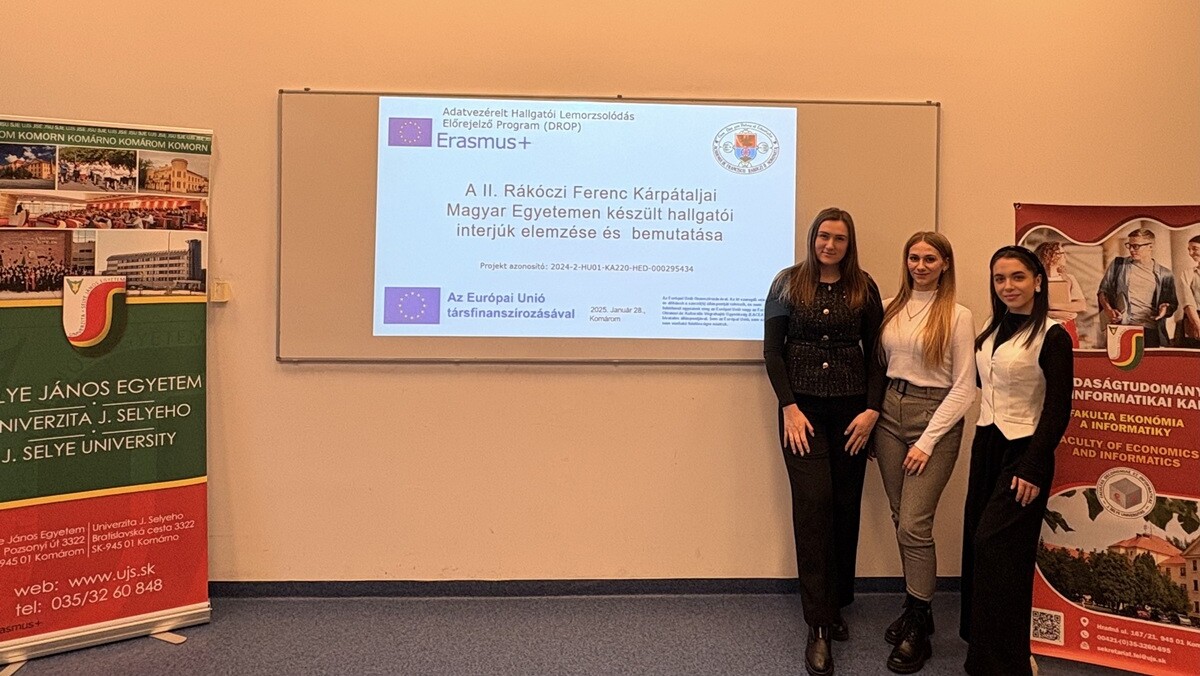
The second international partner meeting of the Erasmus+ DROP project (a programme aimed at predicting student dropout) took place on 29–30 January 2026, hosted by János Selye University in Slovakia. The two-day professional event focused on reviewing the progress achieved so far, sharing research results, and coordinating the next professional and institutional tasks of the project.
Representatives of four partner institutions participated in the meeting: Károli Gáspár University of the Reformed Church in Hungary (project coordinator), the Ferenc Rakoczi II Transcarpathian Hungarian University, János Selye University, and Sapientia Hungarian University of Transylvania. The Department of Accounting and Auditing of the Ferenc Rakoczi II Transcarpathian Hungarian University was represented by Violetta Simon, a lecturer who is actively involved in the project both as a researcher and as a professional administrator.
On the first day of the meeting, researchers from the partner institutions presented the results achieved to date, with particular emphasis on experiences related to conducting and analysing interviews, the preparatory studies completed, and the current status of the data collection process. In her presentation, the representative of the Ferenc Rakoczi II Transcarpathian Hungarian University focused specifically on the current situation of student dropout at the university. The analysis was based on data from the previous semester and was supported by statistical and descriptive indicators, providing a comprehensive overview of student progress, changes in active and passive status, and the development of key academic risk factors.
During the interpretation of the data, special attention was paid to identifying which factors, within the university’s specific institutional and social environment, may contribute to student dropout, as well as to highlighting areas where positive trends can be observed. The presented findings provided an important basis for defining future research directions and for planning potential intervention measures.


In addition to the professional discussions, administrative issues related to the implementation of the project were also addressed, with the department’s lecturer contributing in her role as professional administrator.
The second day focused on tasks determining the further progress of the DROP project. Participants discussed possible forms of institutional interventions that, building on the research results, could contribute to reducing student dropout. Particular attention was given to how each partner institution—including the Ferenc Rakoczi II Transcarpathian Hungarian University—could implement such measures within their own institutional frameworks.
The meeting concluded with a joint lunch, which further strengthened professional ties and laid the foundation for the coordinated and effective continuation of the next phase of the DROP project.

