
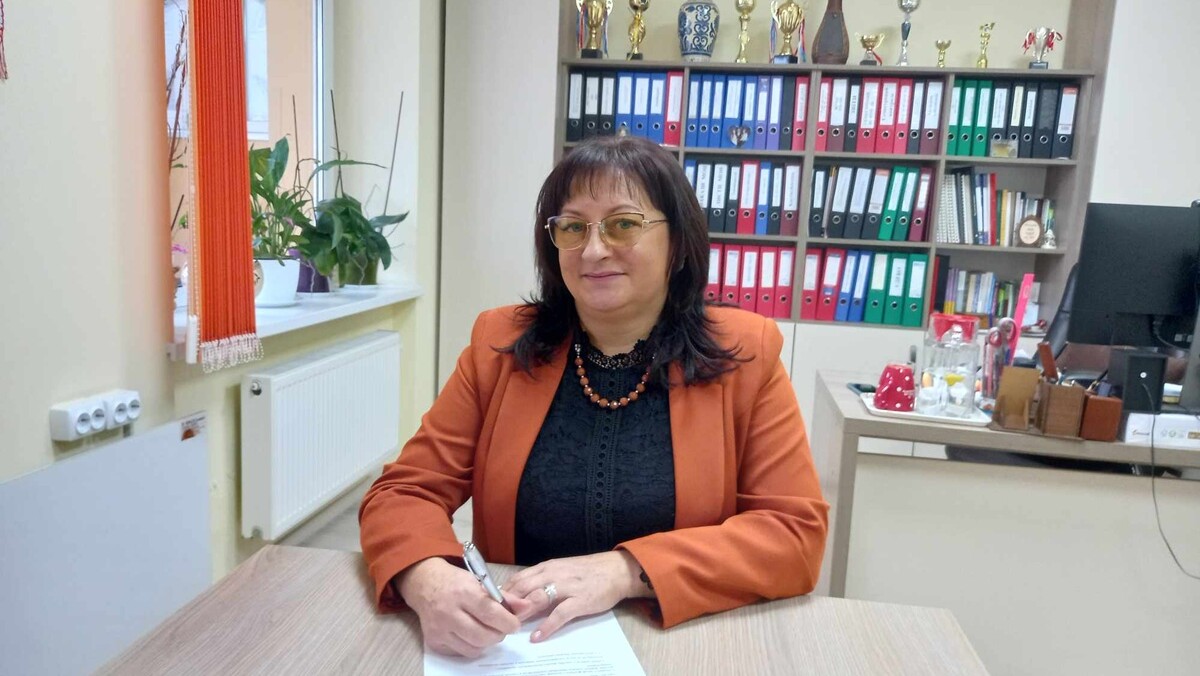
Changes are characterizing everyday life at the Ferenc Rakoczi II Transcarpathian Hungarian University. We asked Dr. Katalin Soós, director of the Vocational High School, about the transformation taking place at this educational institution, which is deservedly popular among young Hungarians in Transcarpathia who wish to continue their studies, about its past, present, and future plans.
– The Vocational High School of the college was launched more than ten years ago, at which time it provided specialized training in addition to secondary school education to Hungarian students in Transcarpathia, and it is no secret that the institution also facilitated admission to the college.
– The Vocational High School was launched in 2014, when we started admissions for five majors. Using the official terminology at the time, we trained ‘junior professionals’ in preschool education, social pedagogy, applied mathematics, accounting and taxation, and tourism. Indeed, one of the reasons for the school’s rapid rise in popularity – in addition to the fact that students could obtain a high school diploma and a professional qualification in 3.5–4 years after ninth grade – was that with this qualification, our students could enter higher education in Ukraine without having to take the External Independent Evaluation (ZNO) introduced in Ukraine in 2008.
Along the way, changes in education law and other legislation led to changes in the names of the advertised courses. For example, since 2019, there has been a social work course instead of a social pedagogy course, and from 2021, the tourism course became tourism and recreation. Starting in the 2020/2021 academic year, vocational training of this type is no longer considered part of higher education. Under Ukraine’s “Law on professional pre-higher education”, this level of vocational training was renamed “professional pre-higher education”. From that point on, our students were admitted to the level of professional junior bachelor in the fields of preschool education, social work, applied mathematics, accounting and taxation, and tourism. This training is a level between higher education and traditional vocational training, which is unique in Europe.
– Despite constant changes in legislation, the institution was able to achieve good results. The majority of graduates continued their studies.
– We had many talented students, and many of them went on to higher education. On average, 60% of our graduates continued their studies at the College in Berehove. Some found jobs in their field, while others went abroad to continue their studies, and still others were accepted to other higher education institutions in Ukraine.
– How was the past year for the institute?
– 2025 was a year full of changes for us. At the beginning of the year, we were faced with the fact that we would no longer be accepting students into higher vocational education, but instead into grades 10–11. Our school is being transformed into a so-called academic lyceum, where we will specifically prepare students for higher education. In the college’s development concept, vocational training will be transferred to another level/institution, the Egán Ede Vocational Training Centers. A law regulating profile-based secondary education and the launch of academic lyceums will come into force in 2027, and we are now preparing for this transition. Vocational training at our institution is being phased out.
– What kind of education will the academic lyceum provide for admitted students?
– It will be a three-year program, as Ukraine will switch to 12-year education by then, and we will specifically prepare the children for higher education. Those who want to learn a trade will have the opportunity to do so in vocational lyceums. Accordingly, we have already announced admissions to the 10th grade this year, and students were admitted to our school after a competency assessment. We admitted fifty students to three classes, and we devoted the first quarter to catching up. At the end of the quarter, they took a competency assessment, and finally, together with their parents, they wrote their applications specifying the subjects they would like to study in greater depth and with a higher number of hours, as well as the university entrance exams they would like to prepare for. So this is a trial year. Now, for the second quarter, we have announced seven subjects, from which the children could choose mathematics, computer science, biology, English and world literature, Hungarian language and literature in increased hours. The students study the subjects they have chosen in increased hours, and we prepare them for the NMT (National Multidisciplinary Test) so that they can successfully pass their final exams.
– Has the Berehove college’s transition to university status in October brought changes to the life of the Vocational High School?
– By becoming the Vocational High School of the University in October, our name has changed as well, and I believe we have moved up a level. Over the past year, 118 of our students were admitted to the University of Berehove, meaning that among Transcarpathian schools we provided the highest number of students to the university. Our graduates who wish to pursue studies in fields not offered in Berehove, such as medicine or engineering, mostly continue their studies in Hungary. In addition to them, two or three of our students continue their studies at the University of Uzhhorod each year.
– Despite the current situation and ongoing changes, do enough students apply to the Vocational High School?
– Two years ago, we admitted 60 students to vocational training; from last September, however, we admitted ten fewer, 50 students, to the tenth grade. Taking into account the steadily declining generations, this can still be considered a good result. Altogether, we have 278 students. As far as teaching staff are concerned, we are in a very good position: over the past ten years we have managed to build an exceptionally strong team. We have well-trained, enthusiastic professionals who are excellent specialists in their fields.
– The institution was accredited in the autumn, so are you able to award state-recognized diplomas to graduating students?
– Indeed. A full inspection and review has been completed in two programmes: Social Work, and Accounting and Taxation. In addition to reviewing our website and all existing documentation, the committee members from the ministry spoke with students, observed how teaching is conducted, inspected our financial and technical resources, and found everything to be in order. This year, we are awaiting accreditation for the remaining three programs. We will not give up; we will do everything we can to ensure that our graduates receive their well-deserved diplomas.
– What can you offer young people, and why is it worth choosing the Vocational High School of the Ferenc Rakoczi II Transcarpathian Hungarian University?
– Our school has a good, supportive environment, and we can provide scholarships and dormitories for everyone. For those who live closer, we organized transportation last year. All of our students received a tablet on which they can download electronic textbooks, so they don’t have to carry them around. They can also use the tablet in class instead of presentations or textbooks. We have a very well-equipped gym and outdoor sports fields, a cafeteria at our school, hot lunches, and they even bake pizza. We provide everything to make our students’ lives easier. We have a very good-spirited, youthful teaching staff who are able to nurture talent—this is proven by the fact that our students place on the podium every year in subject-based and other competitions. We are very proud of them. When a talented child comes to us, our teachers strive to identify that talent, develop it, and help the student move forward.
We are already starting our recruitment campaign in January, and we are confident that we will have students again next year. We are located in a beautiful building on the outskirts of the city, in a peaceful environment, and we are working hard to ensure that all our students pass the NMT so that they can continue their studies wherever and however they want. So far, ninety percent of our students have succeeded in this. To those who are willing, we will teach everything. Our statistics are excellent. Regarding admissions, I would also like to mention that from September, we will be able to admit students to the 11th grade as well. Anyone who missed out last year and has since decided they would like to study with us can also be admitted to the 11th grade. We warmly welcome all interested applicants!

